WEB GAME • INTERACTION DESIGN • GAMIFICATION
A passion project turned Sycamore campaign tool — designing a fast-paced word game that drove 2,000+ plays and 100+ new users within 2 days of launch.
Product & Interaction Designer
2 Weeks — Q2 2024
Figma
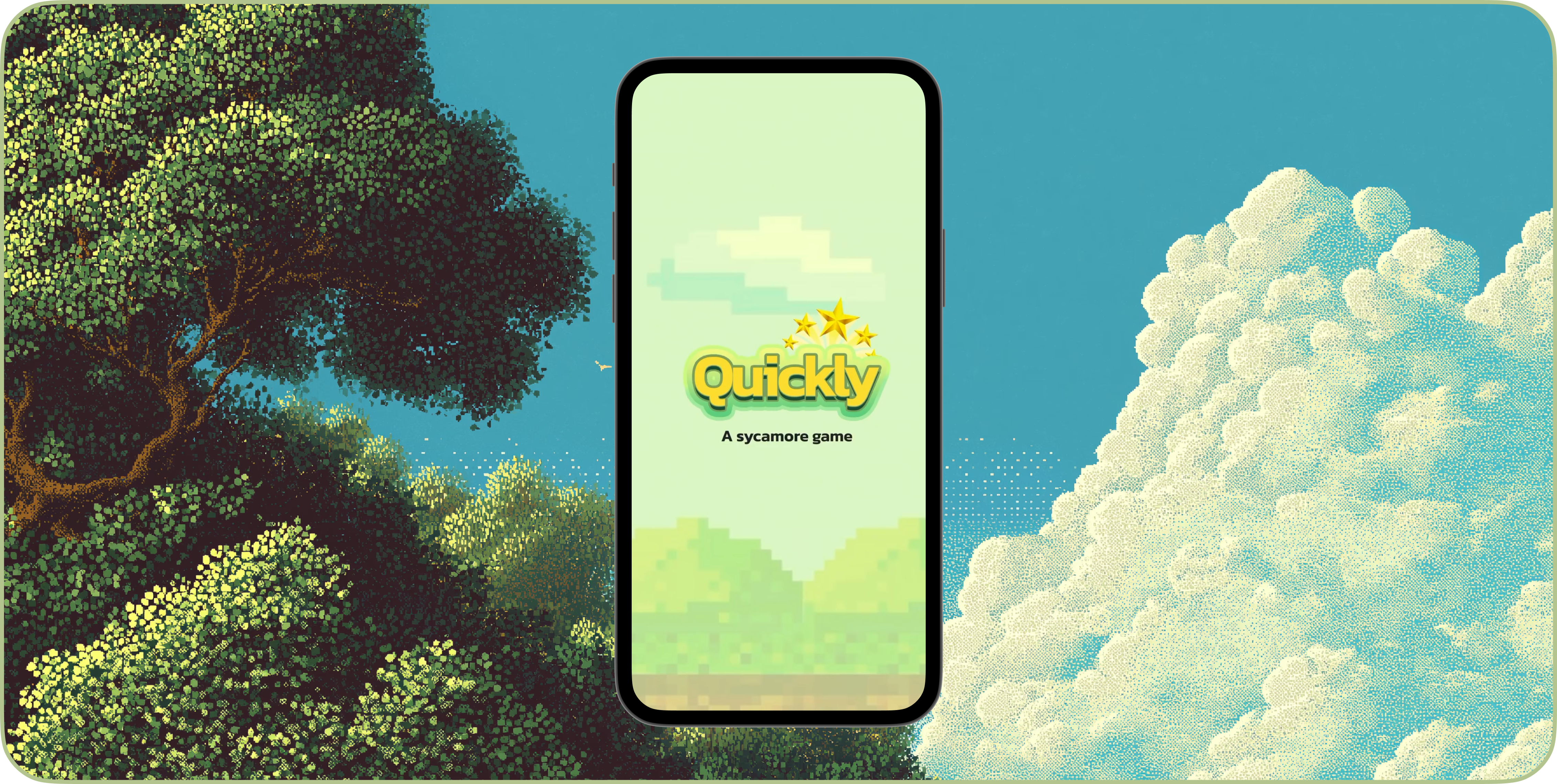
I've always been a fan of mobile games - especially word puzzles and mind games. Designing one was something I had always wanted to do - so "Quickly" started as a personal passion project — a word game built with my colleague Daniel Anyaegbu, something to share with friends.
The concept: type the given words as fast as you can. Midway through development, Sycamore's CEO saw its potential and adopted it as the centerpiece of their 5th anniversary campaign. What began as something we made for fun became a brand awareness and user acquisition engine.
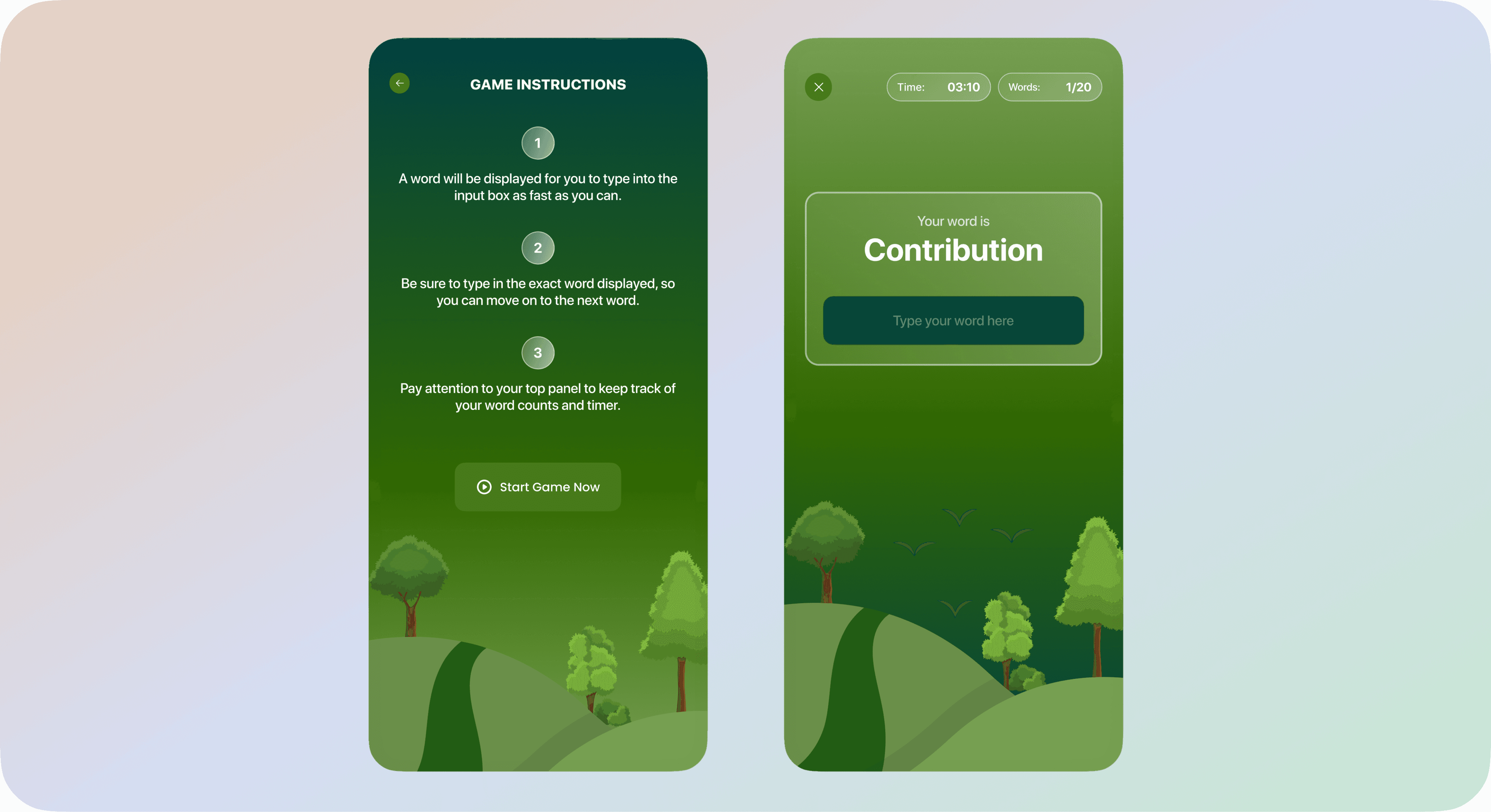
Quickly is rooted in a simple yet engaging premise: Type the given words as fast as you can!
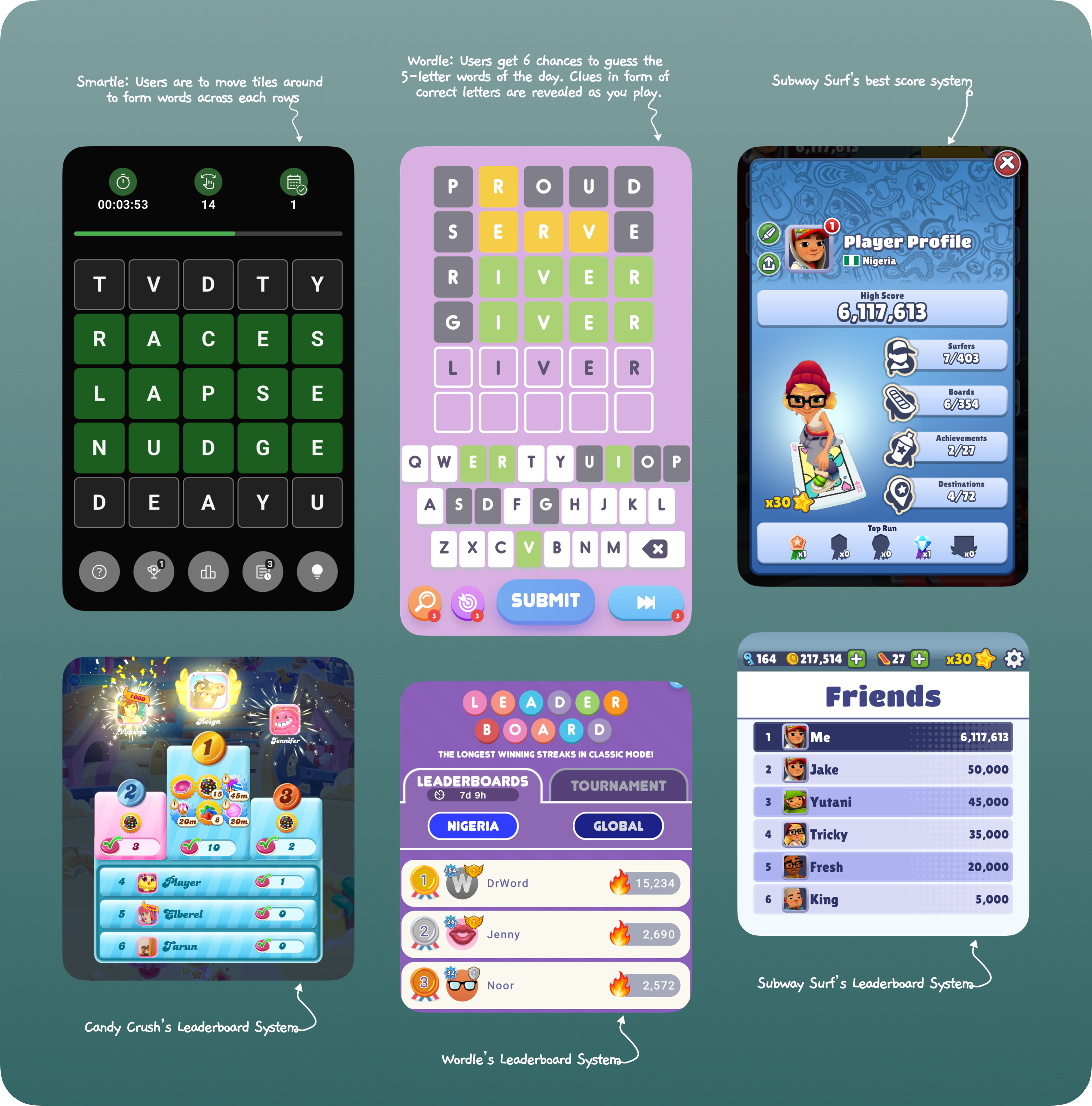
The competitive nature of the game was inspired by the high-score mechanics found in classic mobile games like Candy Crush and Subway Surf, while the word-based challenges drew inspiration from my favorite brain-sharpening games; Smartle and Wordle.
Timing System
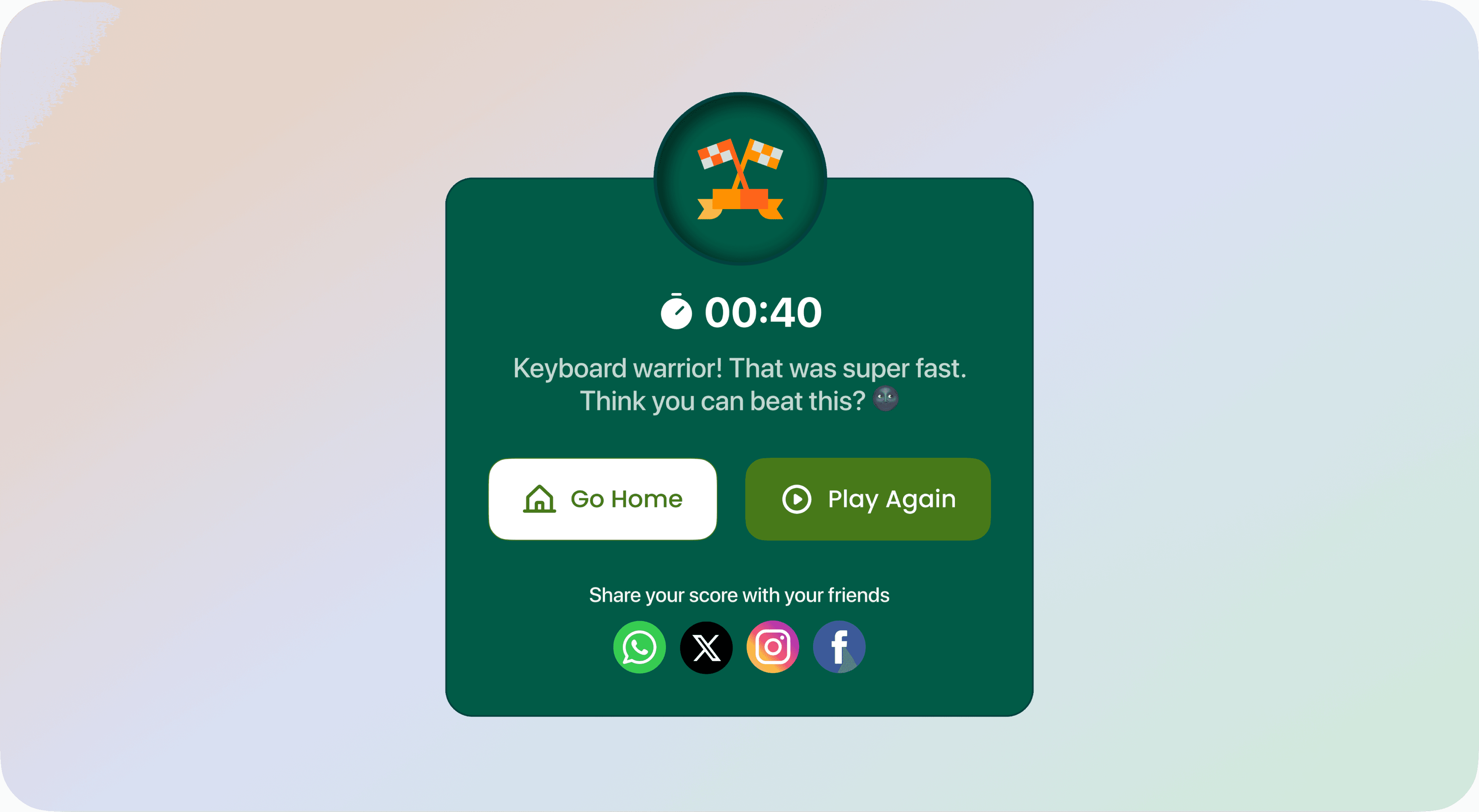
The game's timing system was a crucial part of its design. Through research and user testing with a small group of mobile game players (mostly friends and acquaintances), we explored two possible time systems: one with a fixed time for users to beat and another that lets players improve their time with unlimited attempts. After comparing both systems, the feedback leaned heavily toward the open-ended timing option. This made players feel less restricted, encouraging them to improve their scores and keep competing.
Leaderboard & Best Score
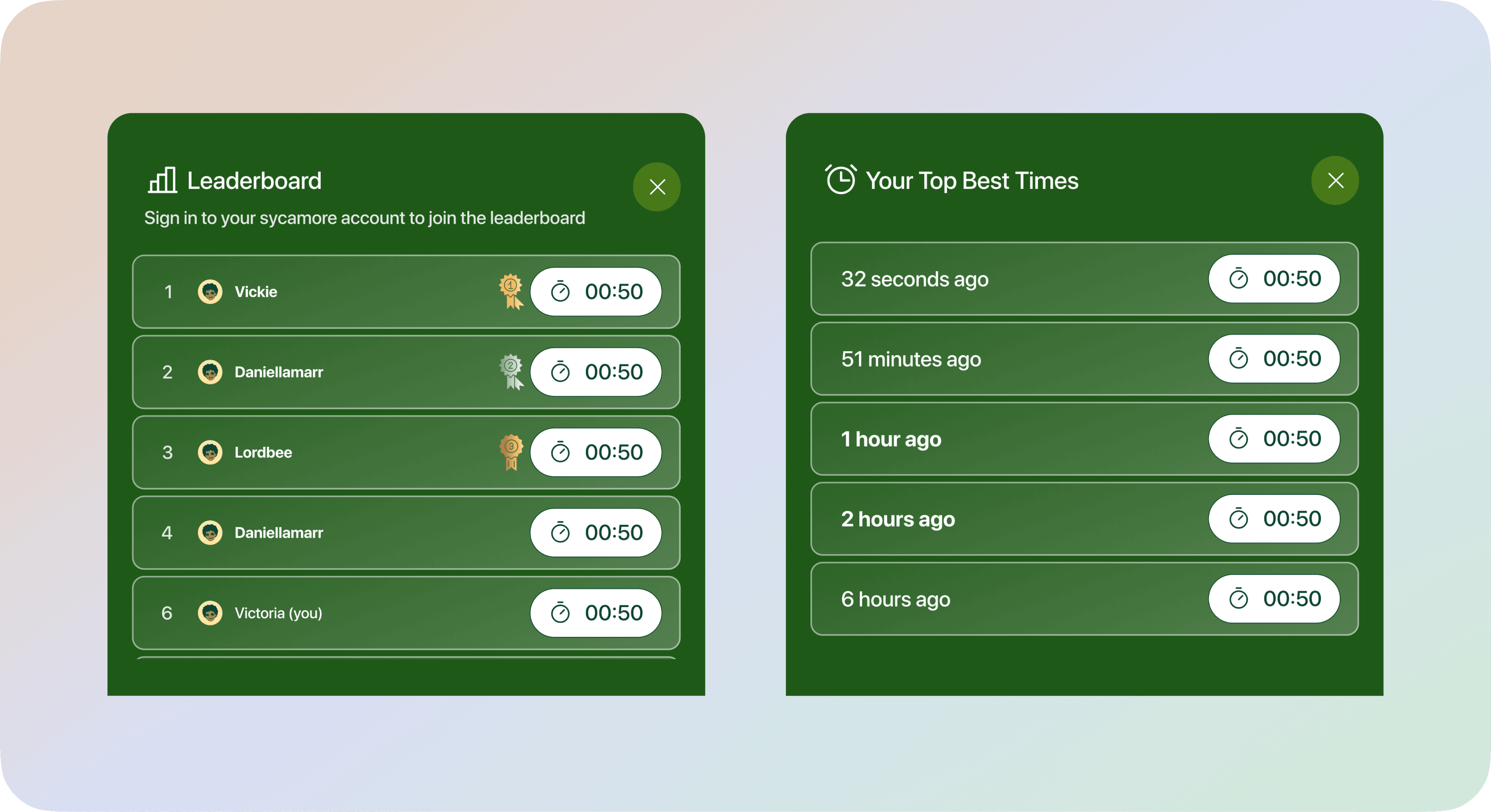
The game features a leaderboard that tracks user scores, encouraging players to continue playing to improve their standing. I also added the Best Score feature, which allowed users to track their five best scores and see how they were improving, adding another layer of motivation.
Game Sound Effects
Since it was a game, I wanted to ensure that the experience felt dynamic and exciting, so we integrated sound effects for key actions - starting the game, typing a correct word, making a mistake, and finishing a round. This created a sense of immersion while keeping the overall interface simple.
Accessibility & Fairness
We opted for a web-based format rather than an app, ensuring the game was accessible via a simple link. However, we also ensured to keep things fair by restricting the game to mobile devices, as typing on laptops would have given some players an unfair advantage.
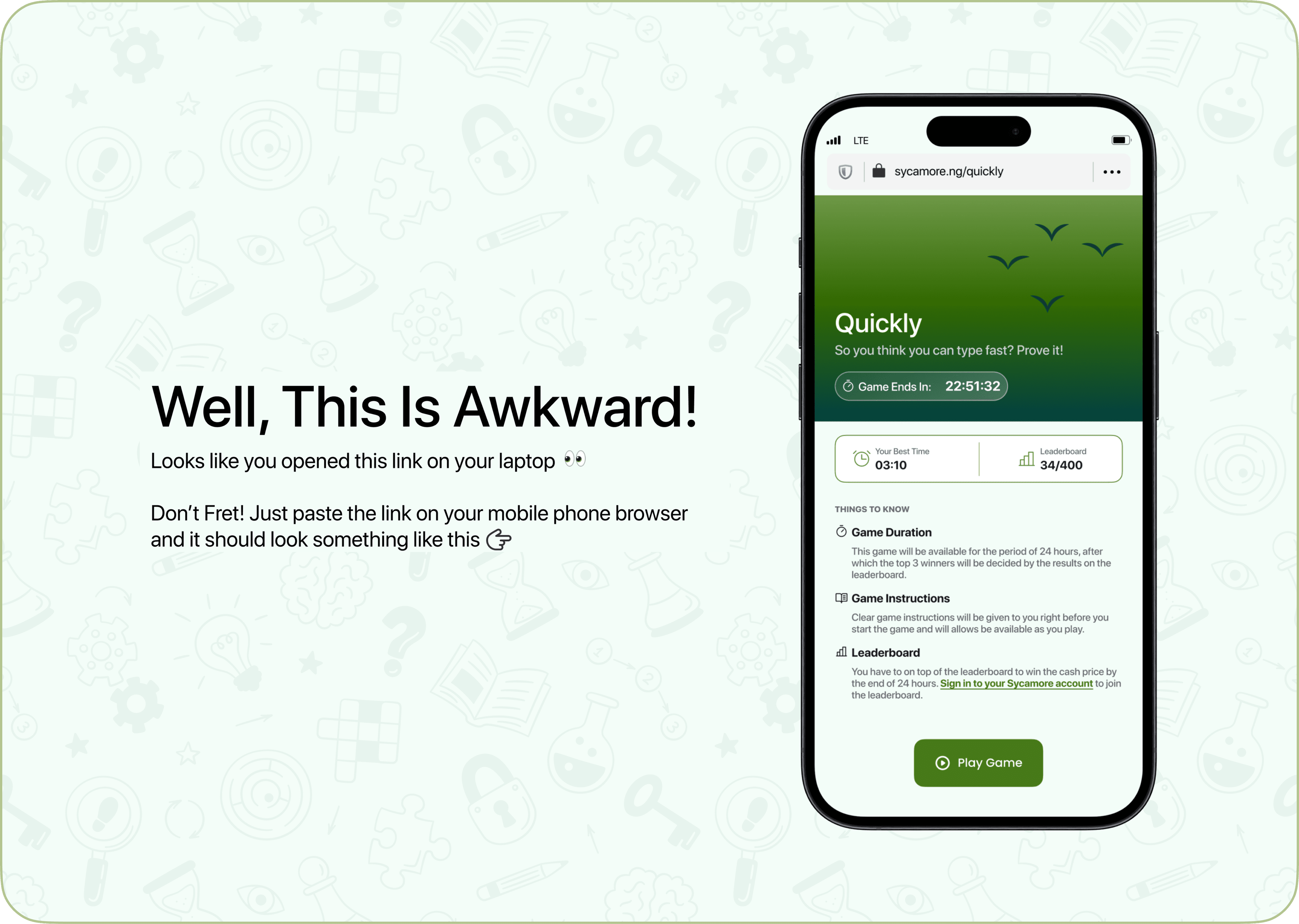
Midway through development, the project took an exciting turn. The CEO of Sycamore - a Nigerian Fintech Company - saw the potential in "Quickly" and decided to use it as the central piece of their 5th anniversary campaign. The game's competitive nature aligned with their vision to engage users in a fun, memorable way while offering prizes for the top players on the leaderboard.
This pivot required some changes. I wanted the game to reflect Sycamore's brand, so I incorporated their green color scheme and made other visual adjustments - like a visual representation of growth using trees - to align with their mission and identity.
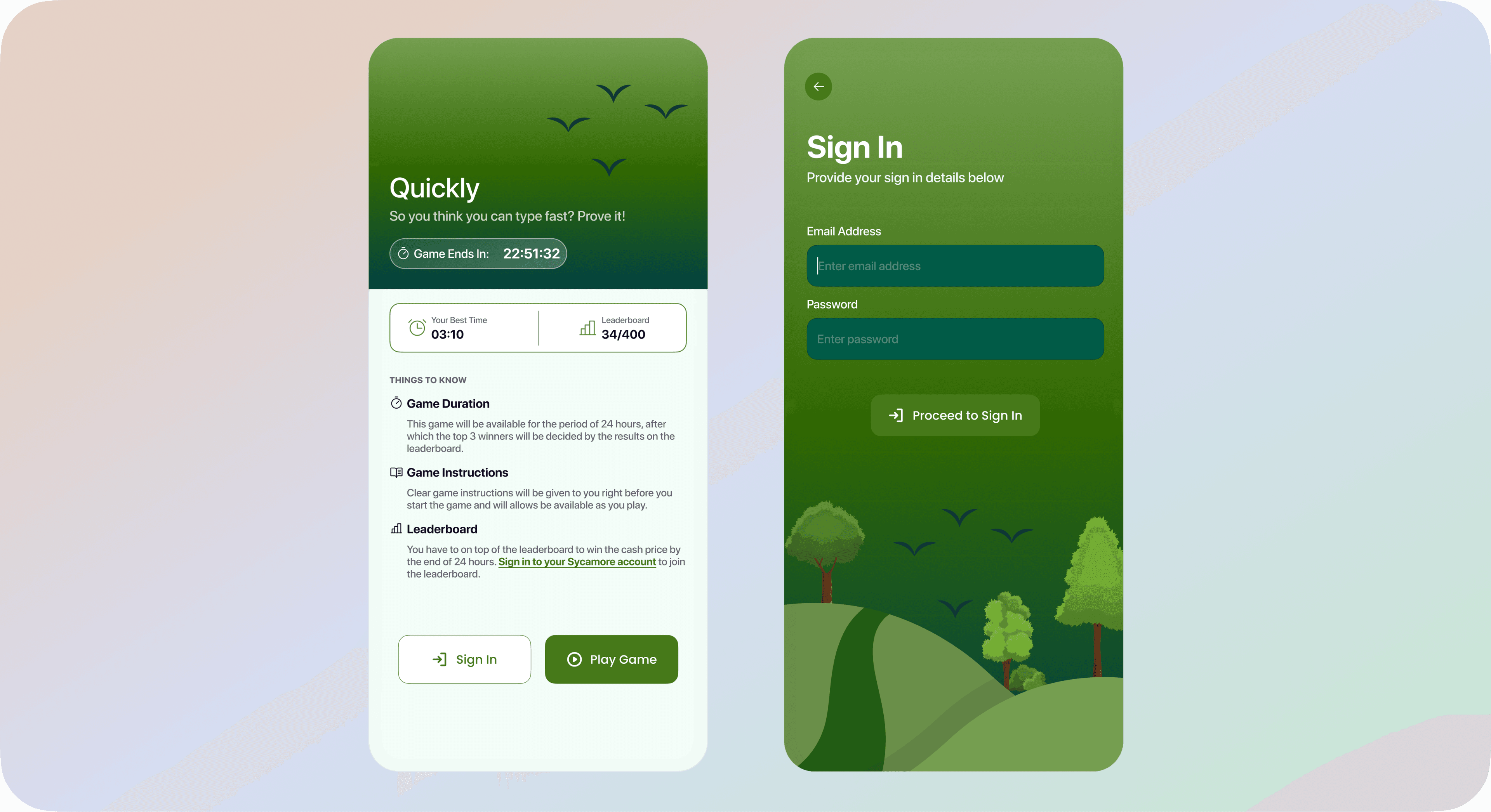
Moreover, we needed to integrate the game into Sycamore's user system, so I adjusted the experience to force players to log in (or register if they aren't already) to their Sycamore account to enter the leaderboard and compete for the anniversary prizes. This integration served two purposes: it kept the game relevant to the company's campaign and drove user acquisition. Players could still enjoy the game casually without an account, but they had to log in to compete for the prizes.
Collaboration with my colleague (handling the development side) was essential throughout the process. We worked closely to ensure that the design choices were feasible from an engineering standpoint. Every decision had to consider performance, especially given our focus on mobile devices.
For instance, when introducing sound effects, we ensured these wouldn’t overload the system or slow down gameplay. Likewise, when thinking about animations, we kept them minimal to avoid unnecessary delays or distractions.
The game was widely received, attracting over 2,000 plays and 100 new users in 2 days. However, we quickly discovered that some users attempted to game the system by hacking into the leaderboard. While we hadn’t anticipated this level of competitive behavior, we identified the culprits and removed them from the leaderboard, maintaining the game’s integrity.
This experience highlighted the importance of security in game design, a factor we are now focusing on as we develop Quickly 2.0. The new version will include additional security measures, as well as exciting features like a multiplayer mode, new word categories, and potentially even visual puzzles to diversify gameplay.
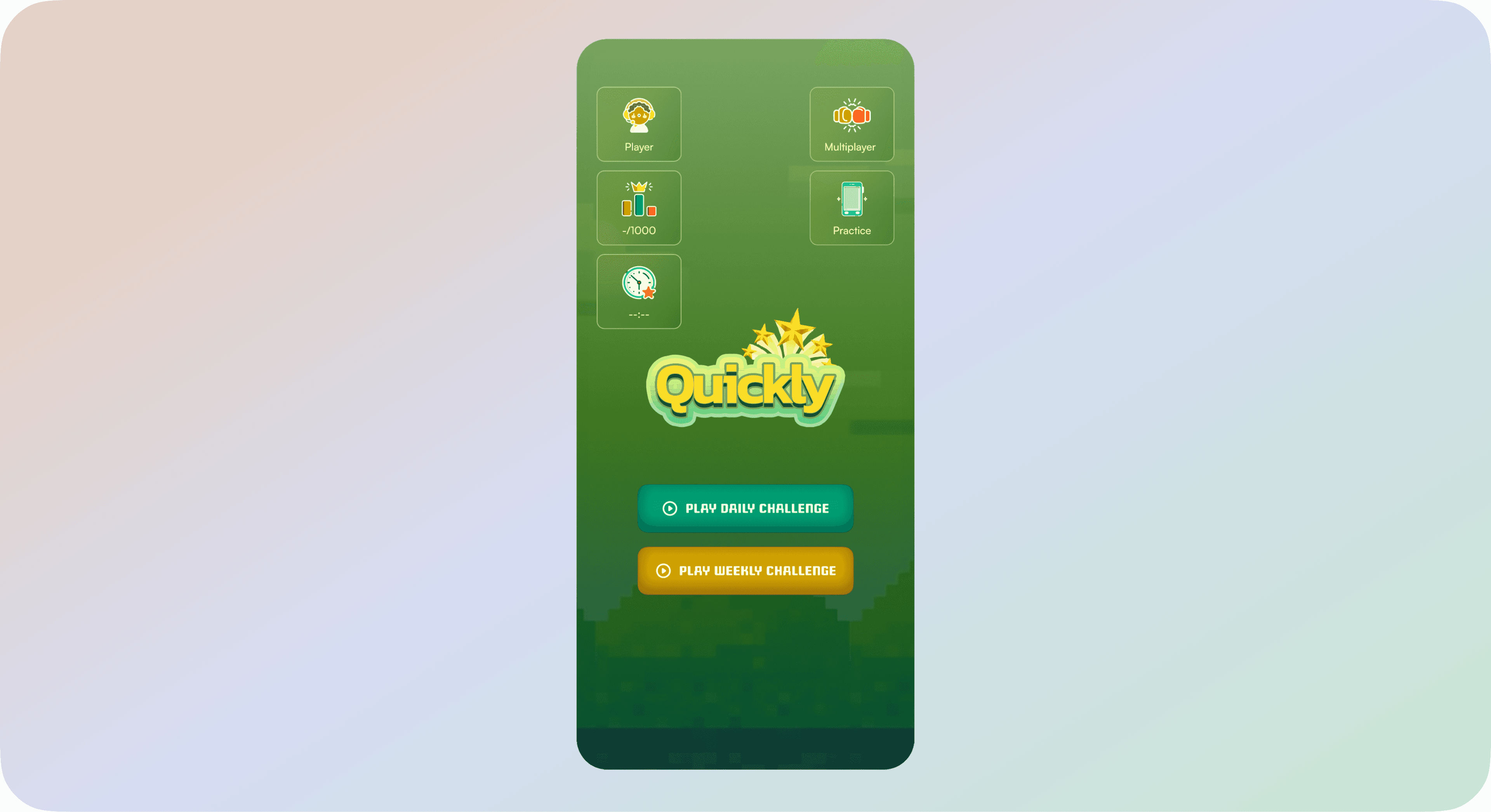
The game launched as part of Sycamore's 5th anniversary campaign and exceeded all expectations within the first 48 hours.
- 2,000+
- Total Plays (2 days)
- 100+
- New Users Acquired
- 48 hrs
- Time to Results
Quickly taught me that the most engaging products are built around a single, well-designed tension loop. Every round had one goal, one feedback moment, and one reason to go again. Simple systems, done right, are powerful. I also learned something valuable about security in game design — we hadn't anticipated competitive users gaming the leaderboard system. It's now a core consideration in the Quickly 2.0 architecture. Designing for trust means designing against abuse, not just designing for delight.
Next Project