EVENT MANAGEMENT • SAAS • WEBSITE DESIGN • WEB APP
A four-sided event platform built on Sycamore's fintech rails — designed under a six-week timeline, powering 10 events and 2,000+ ticket buyers in its first four months.
Sole Product Designer
6 Weeks — Q3 2023
Figma • Coda
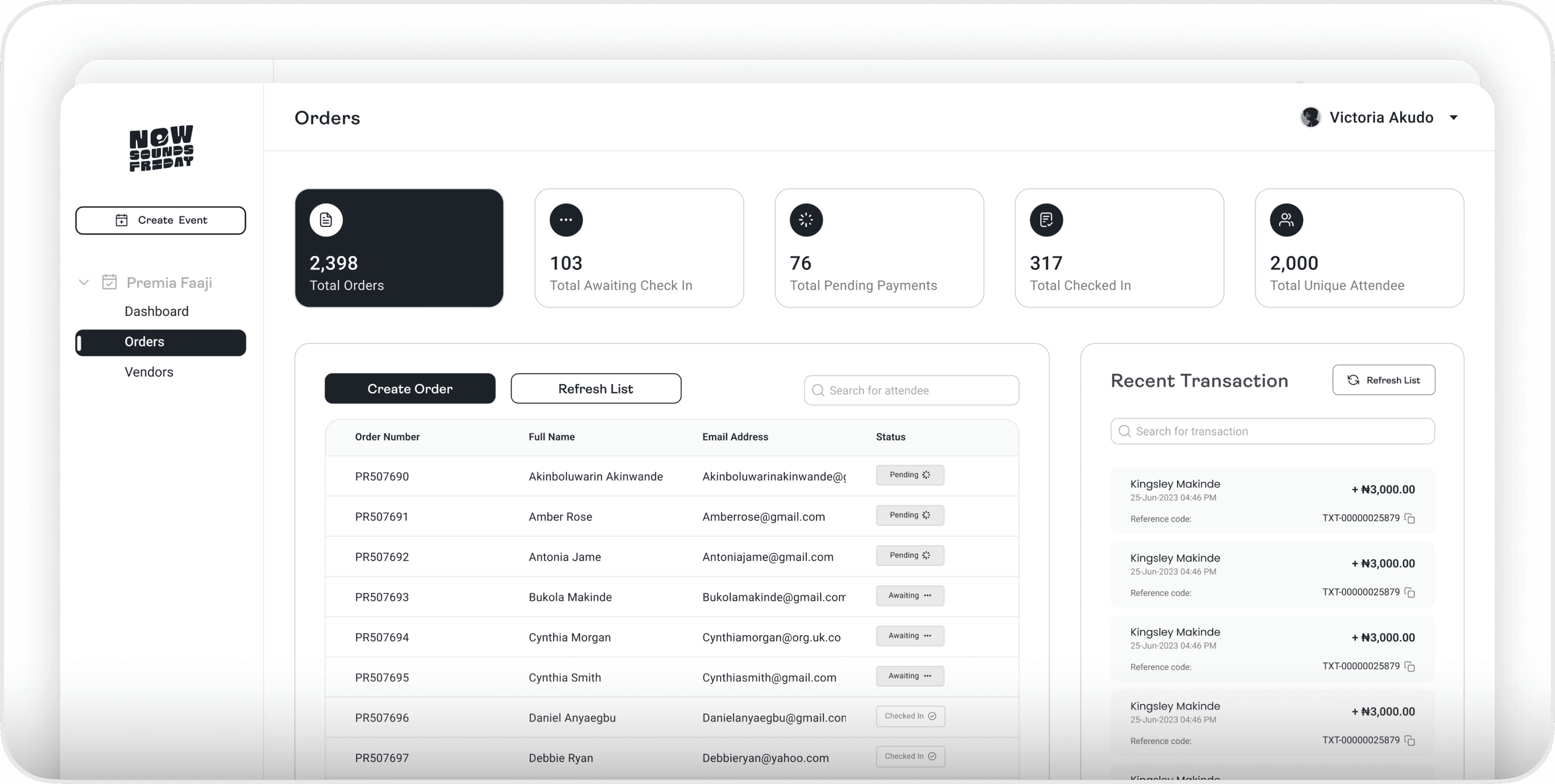
Events by Sycamore is a vertical product that turned Sycamore's existing fintech infrastructure — KYC'd accounts, hosted wallets, instant payments — into a fully-featured event platform. It was built for four user types in one system: organizers, vendors, on-site staff, and attendees. I was the sole product designer, and the project shipped under a tight timeline driven by a partnership with Now Sounds, an entertainment company that needed a digital backbone for an upcoming series of events.
It also became a stealth user-acquisition channel for Sycamore's core fintech app — every ticket purchase created a fully-KYC'd Sycamore account.
Now Sounds, an entertainment company, approached Sycamore to digitally power a series of their upcoming events. The brief was straightforward — build an event management infrastructure and integrate fintech capabilities into it. Sycamore already operated the rails this kind of product needed: KYC, hosted wallets and real-time payments.
The opportunity was to integrate our fintech capabilities directly into live events — turning each ticket sale, each vendor payout, and each on-site purchase into a touchpoint with Sycamore's financial ecosystem.
So, Events by Sycamore became two things: the event management platform Now Sounds needed, and a user-acquisition channel that brought new customers into Sycamore's ecosystem through events they were already attending.
Three things had to be true for this to ship:
- Each of the four user groups gets a tailored experience. No "one dashboard with permissions" shortcut — the jobs are too different.
- Less fintech jargon for attendees. They're purchasing a ticket, not creating a fintech account, even if that's the underlying process.
- Ship to a real event within six weeks. No room for traditional research timelines.
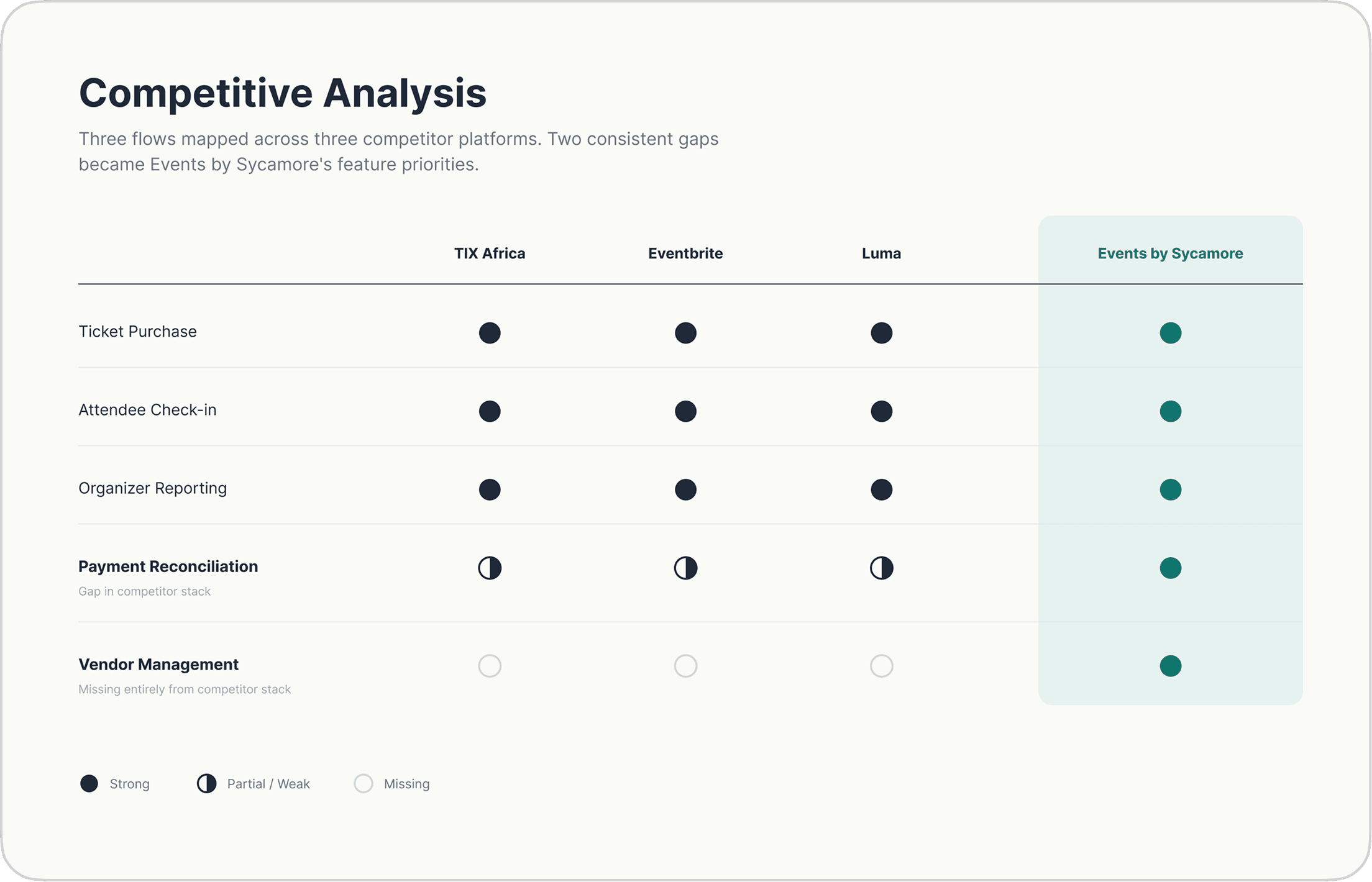
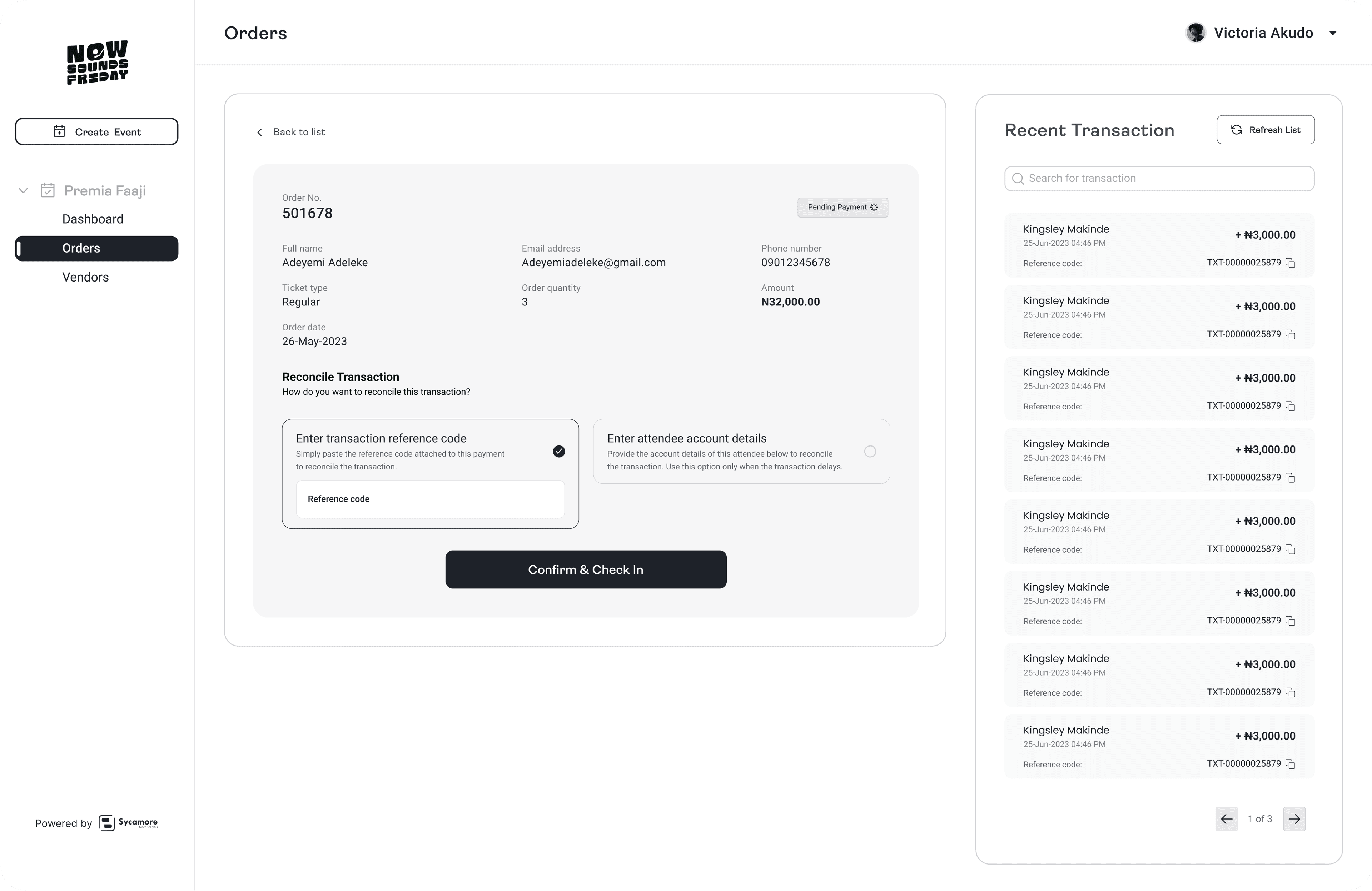
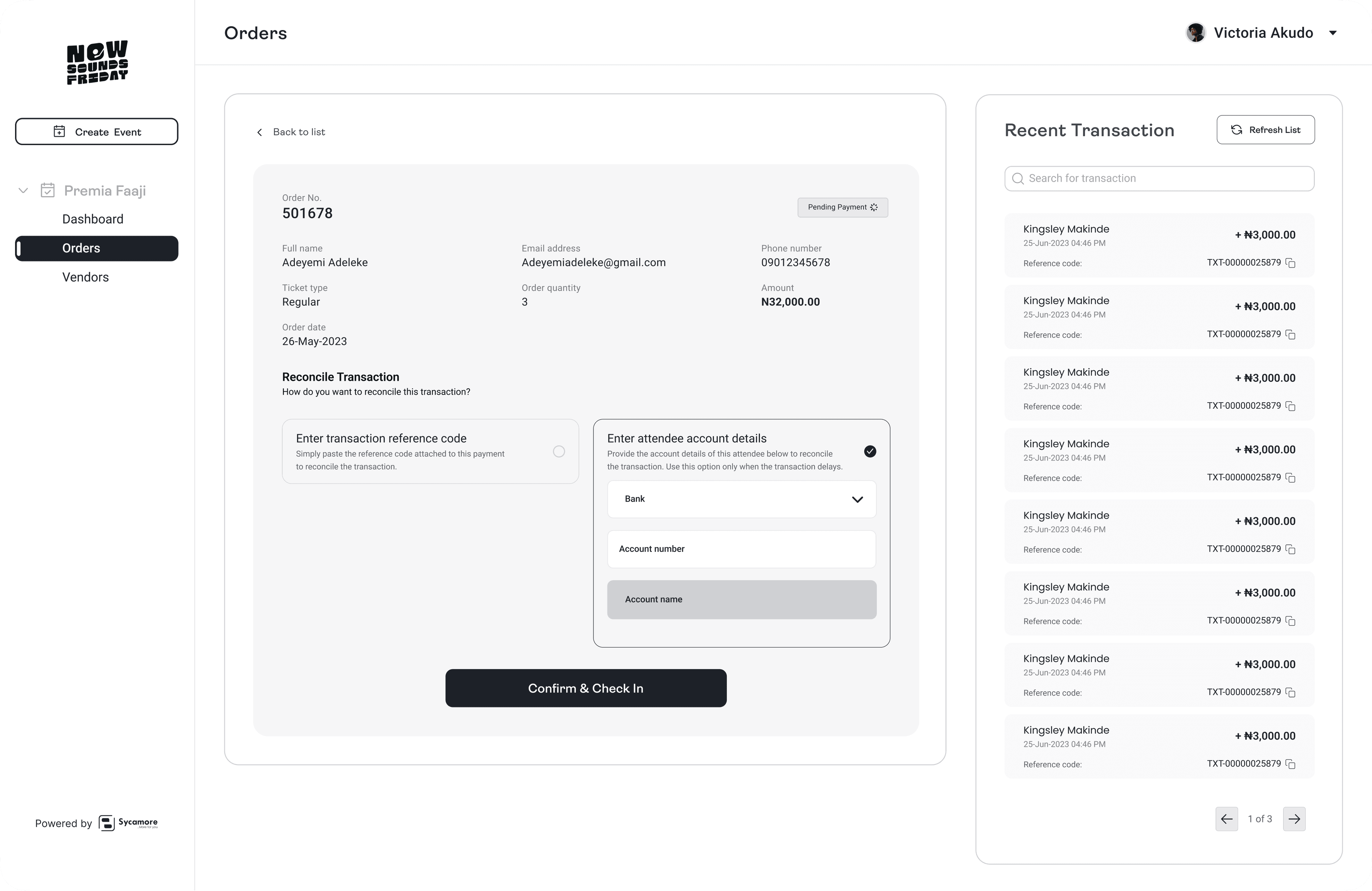
Research substitute: structured competitive teardown. Without time for primary user research, I ran a structured analysis of TIX Africa, Eventbrite, and Luma. I mapped each platform's flows for ticket purchase, attendee check-in, and organizer reporting — then identified where each broke down. Most of them don't reconcile payments well and also lack vendor management entirely. The gaps became our feature priorities. Given a longer timeline I'd have run interviews with event organizers — but given the constraint, these competitor analyses gave a defensible starting point and saved time.
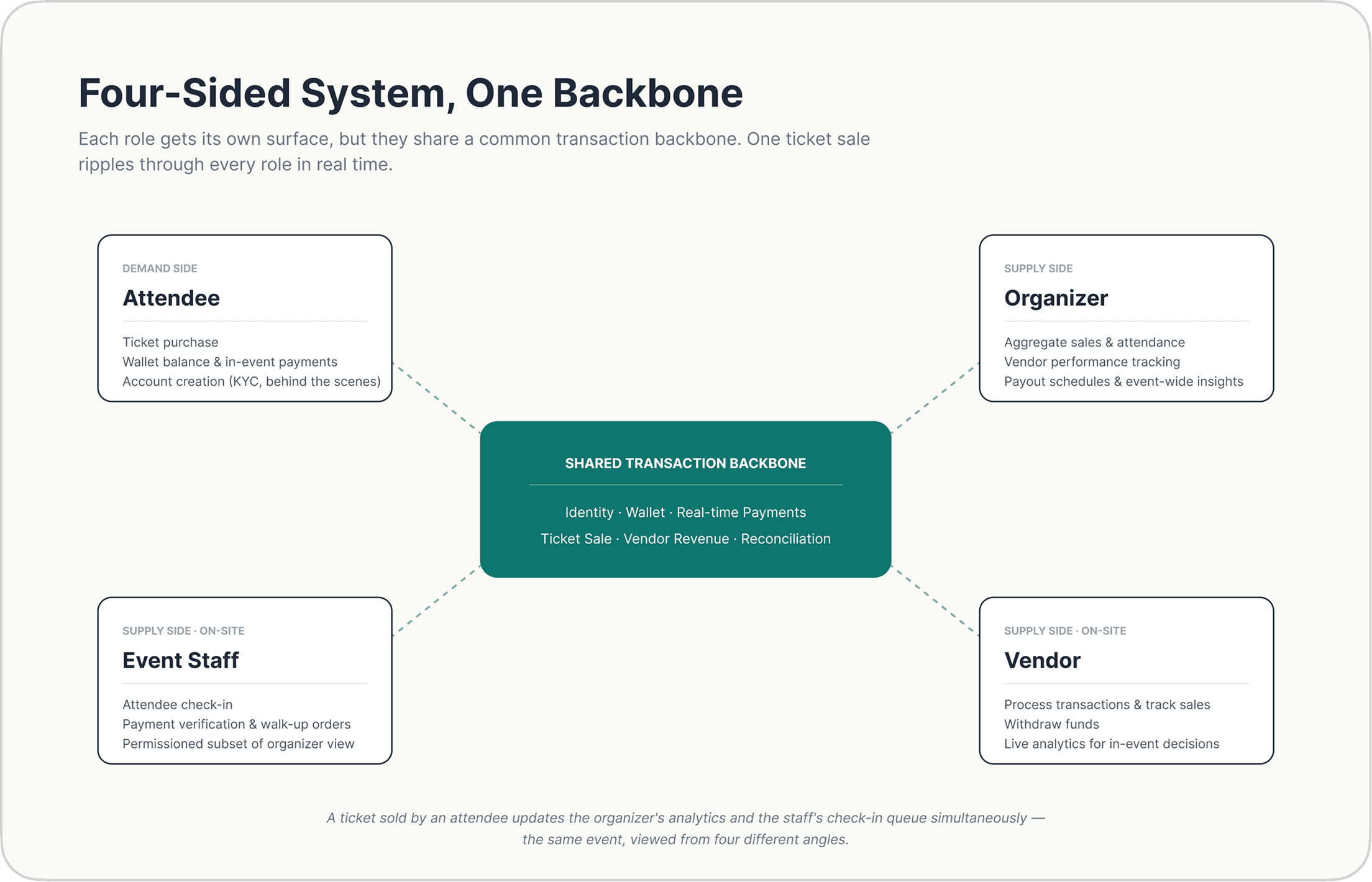
Mapping the four-sided system. The key design challenge: each role needed its own surface, but they had to share a common transaction backbone. When an attendee buys a ticket, that single event has to ripple through the organizer's analytics, and the on-site staff's check-in queue — in real time. I sketched the system as a flow of state across roles before designing any screens.
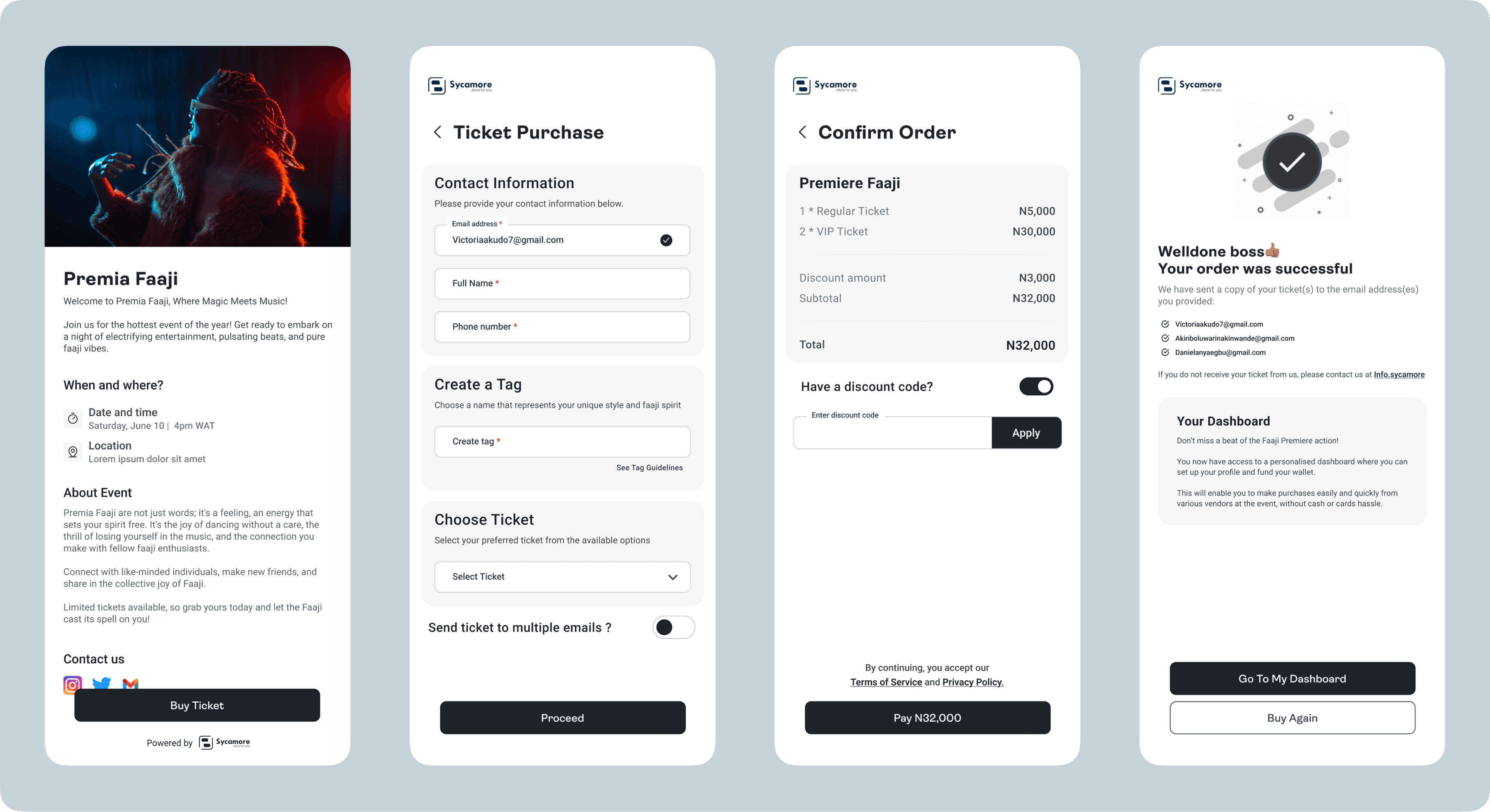
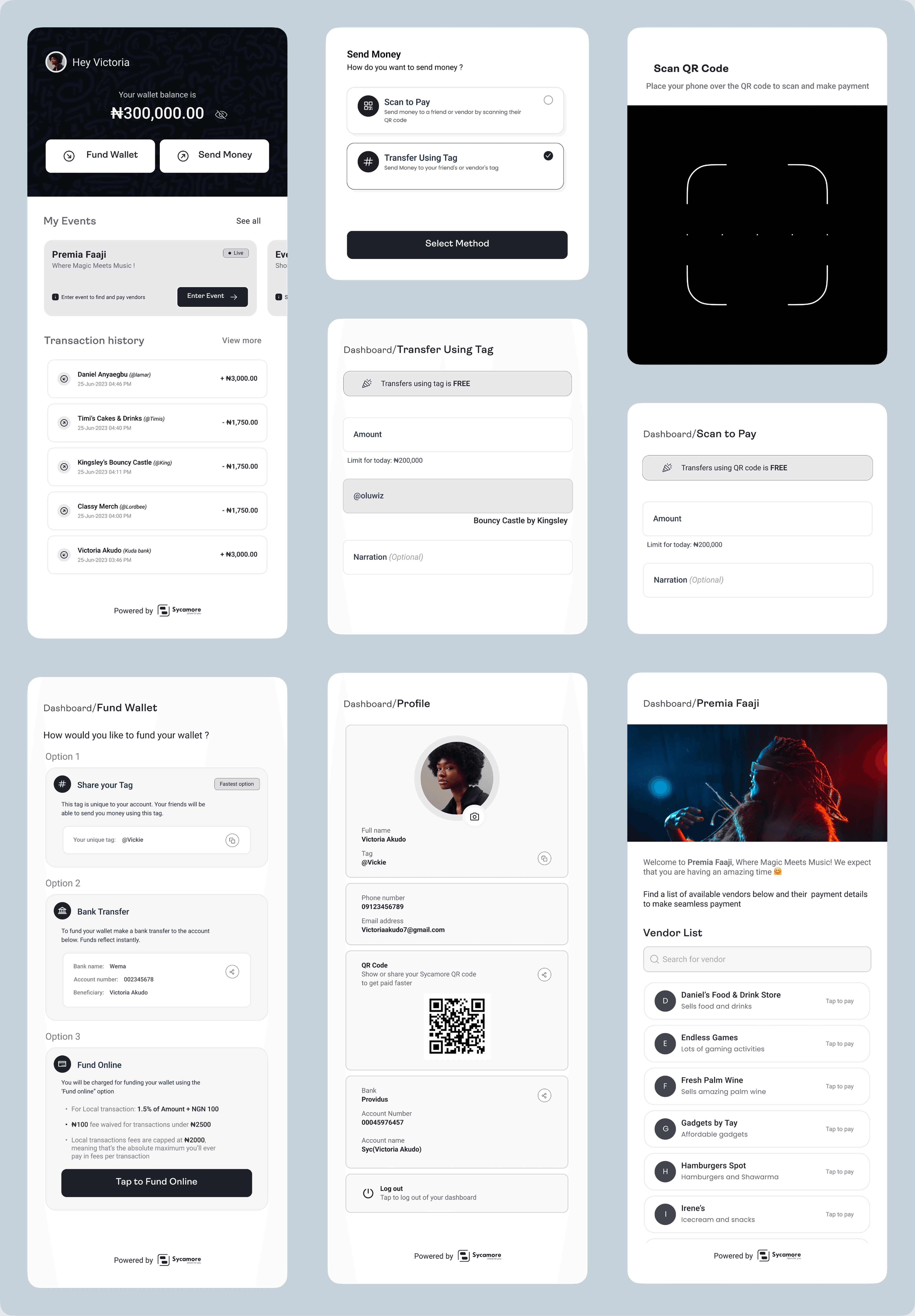
Attendee experience: ticket purchase → wallet account
The lowest-friction entry point. Attendees buy a ticket; behind the scenes, a fully-KYC'd Sycamore account is created using only what the ticket purchase already requires (name, phone, email). Once inside the wallet, they can fund their account, pay vendors at the event, and send money to friends — all without leaving the ticketing context.
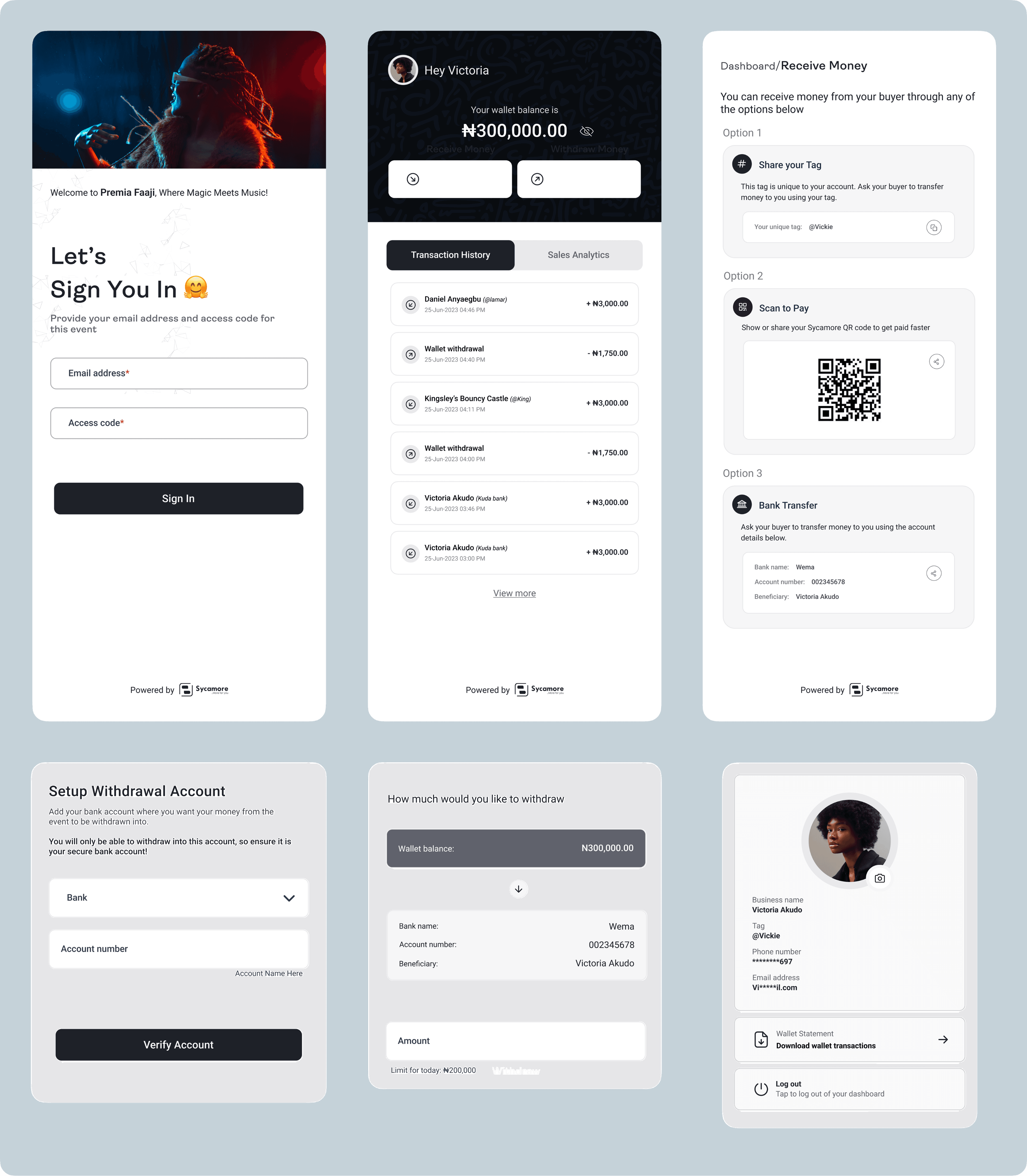
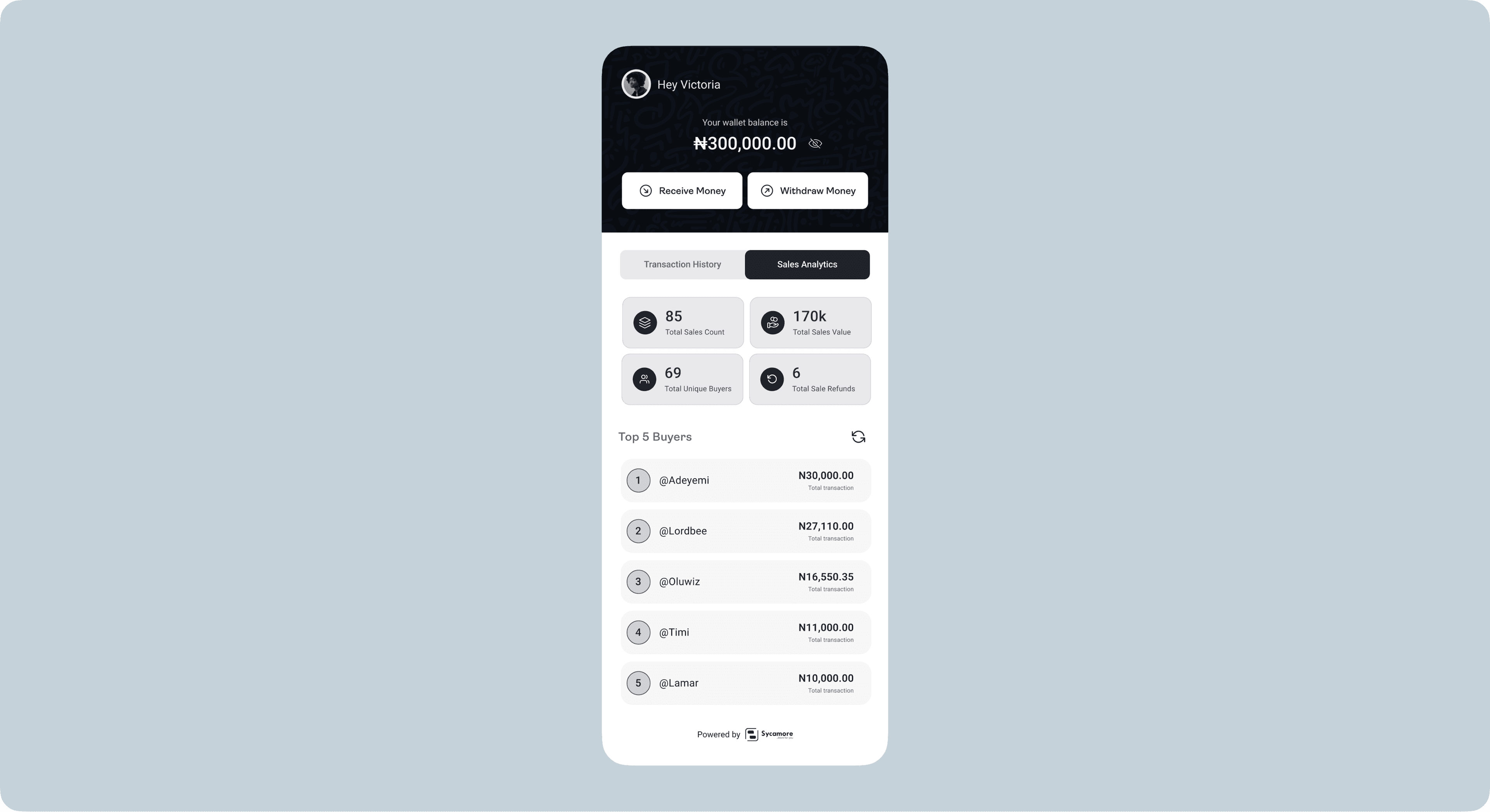
Vendor experience: payment dashboard with live analytics
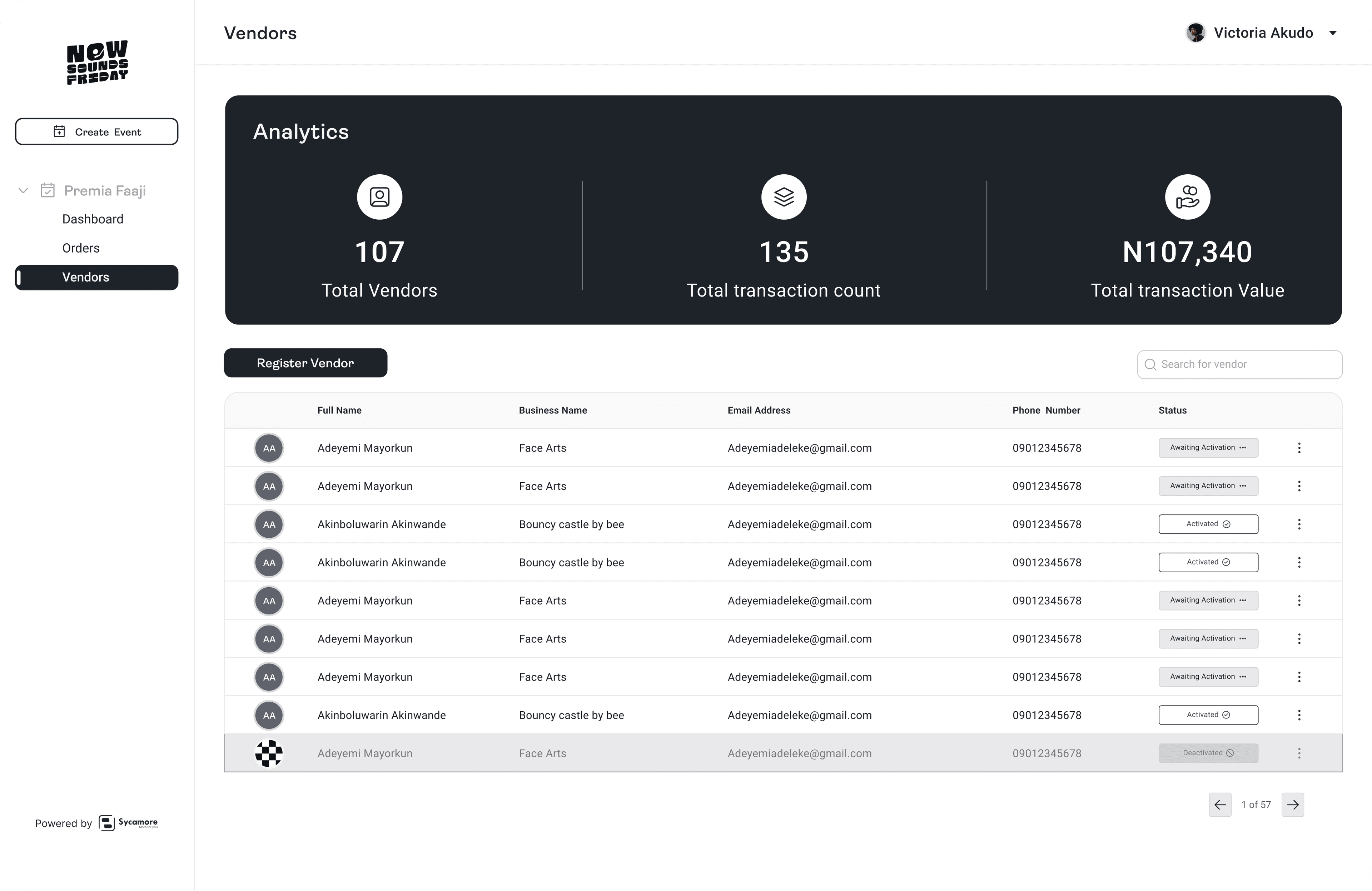
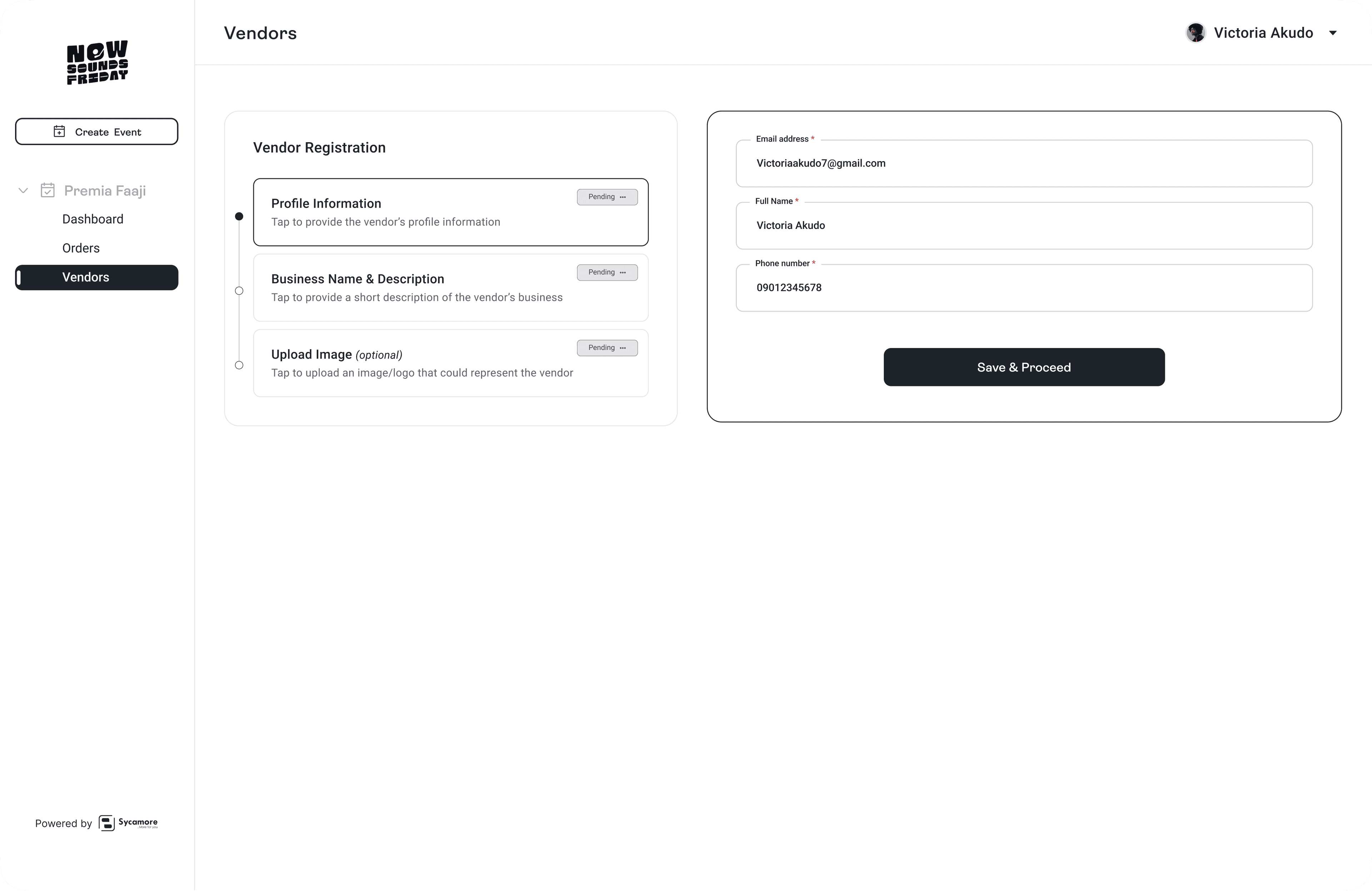
Vendors process transactions, view real-time sales, and withdraw to their bank — without third-party POS terminals. The dashboard intentionally surfaces the metrics vendors act on (today's revenue, top-selling items, payout status) and hides the rest.
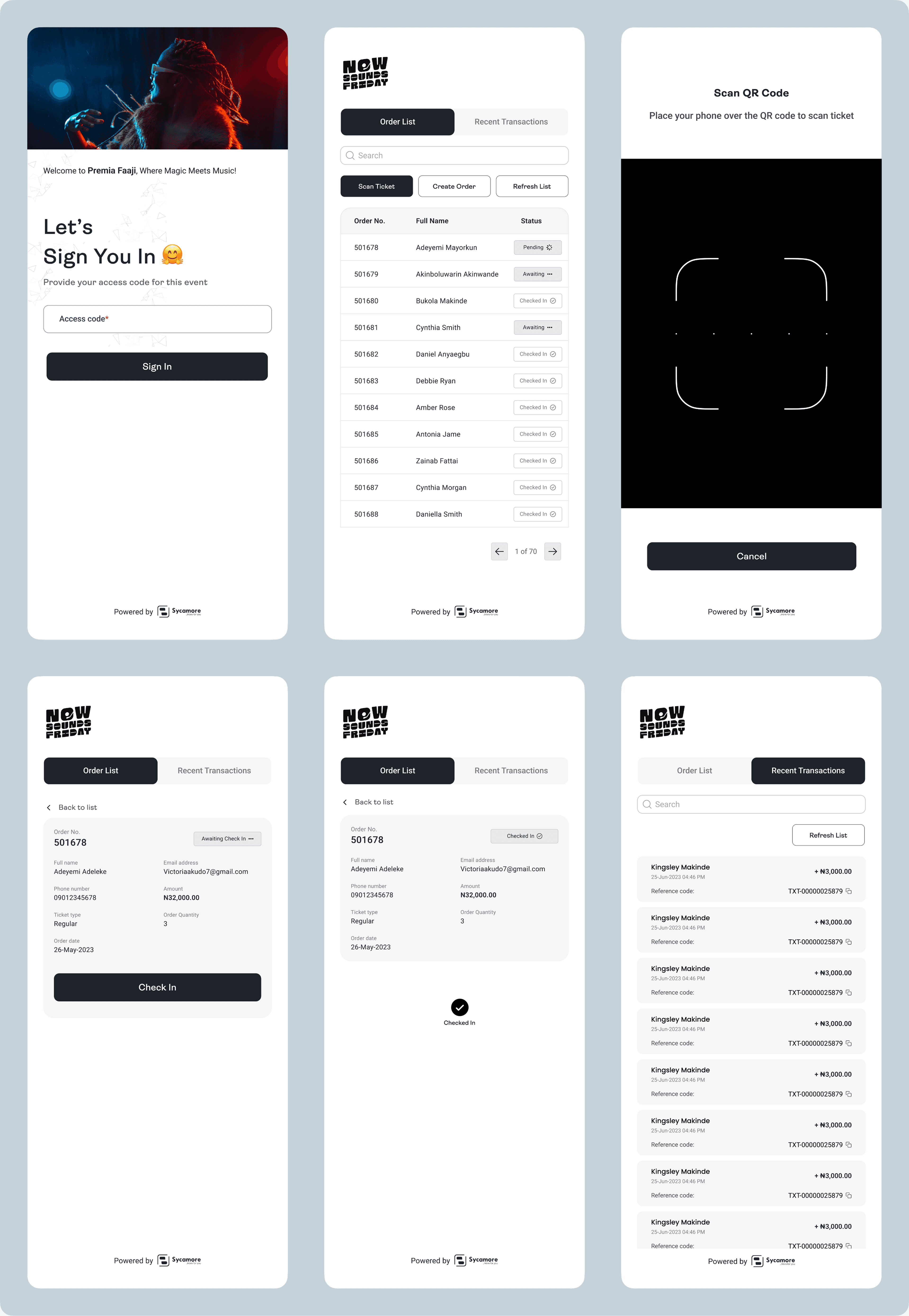
Event staff: a stripped-down organizer view
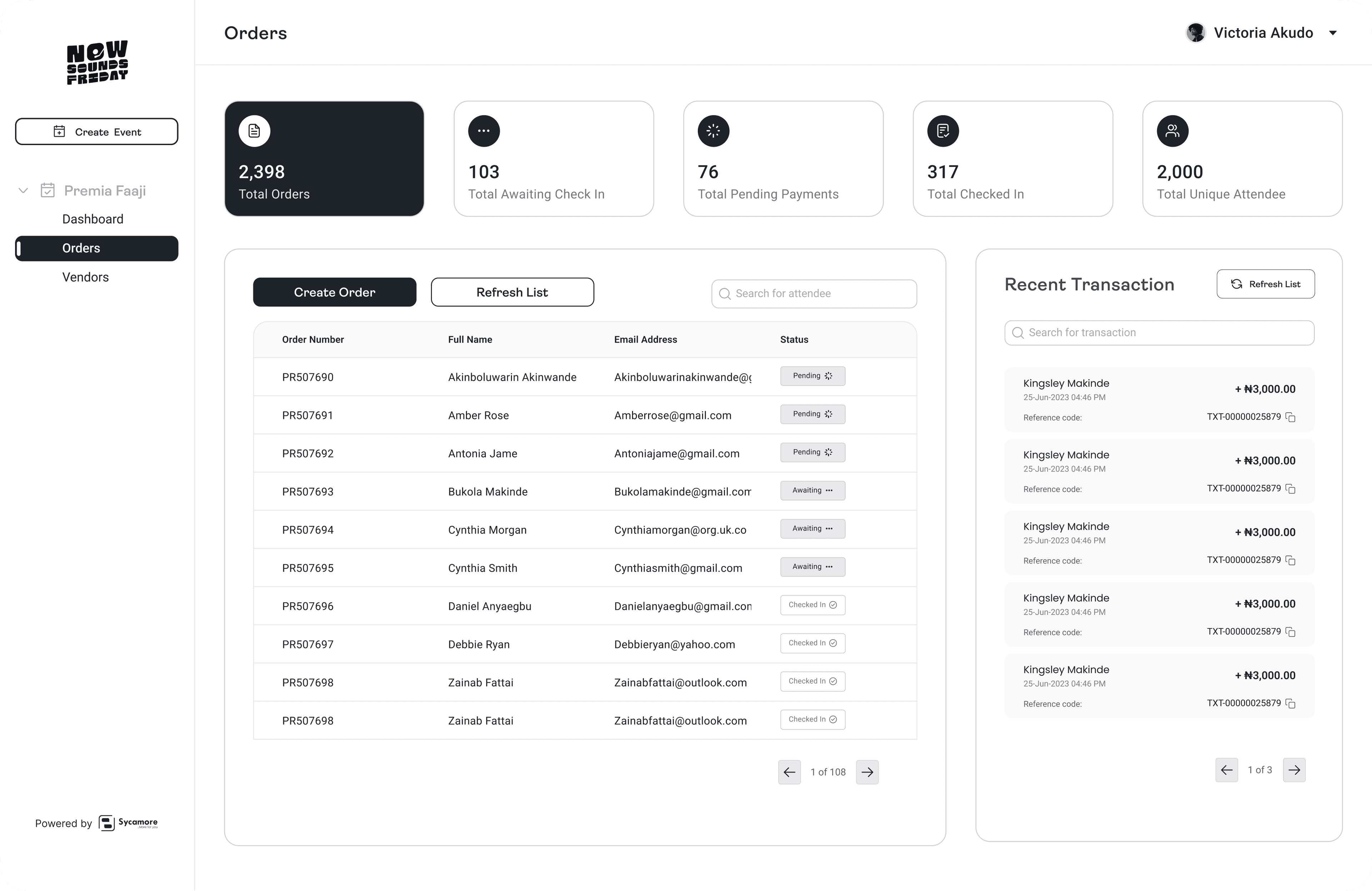
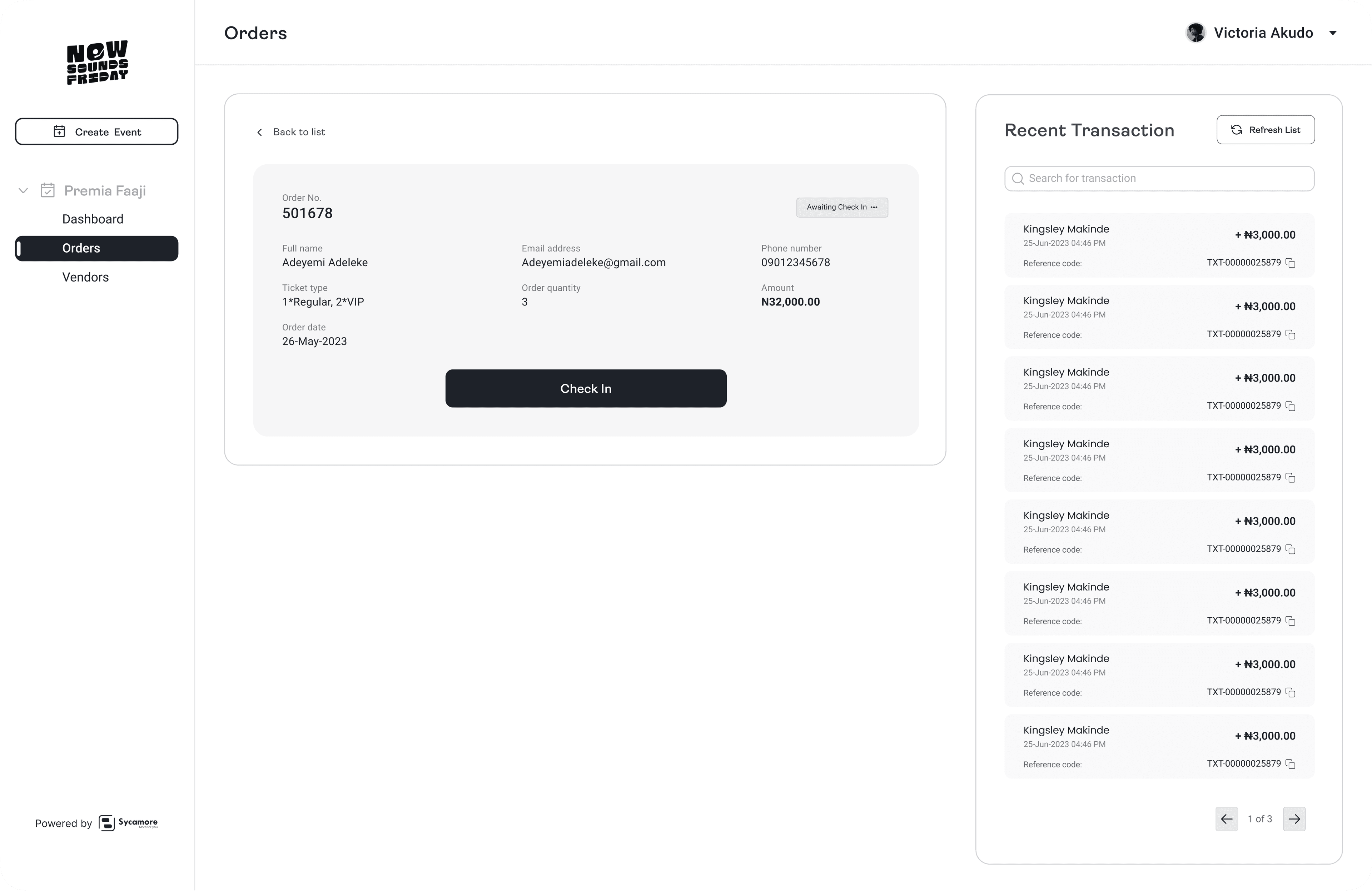
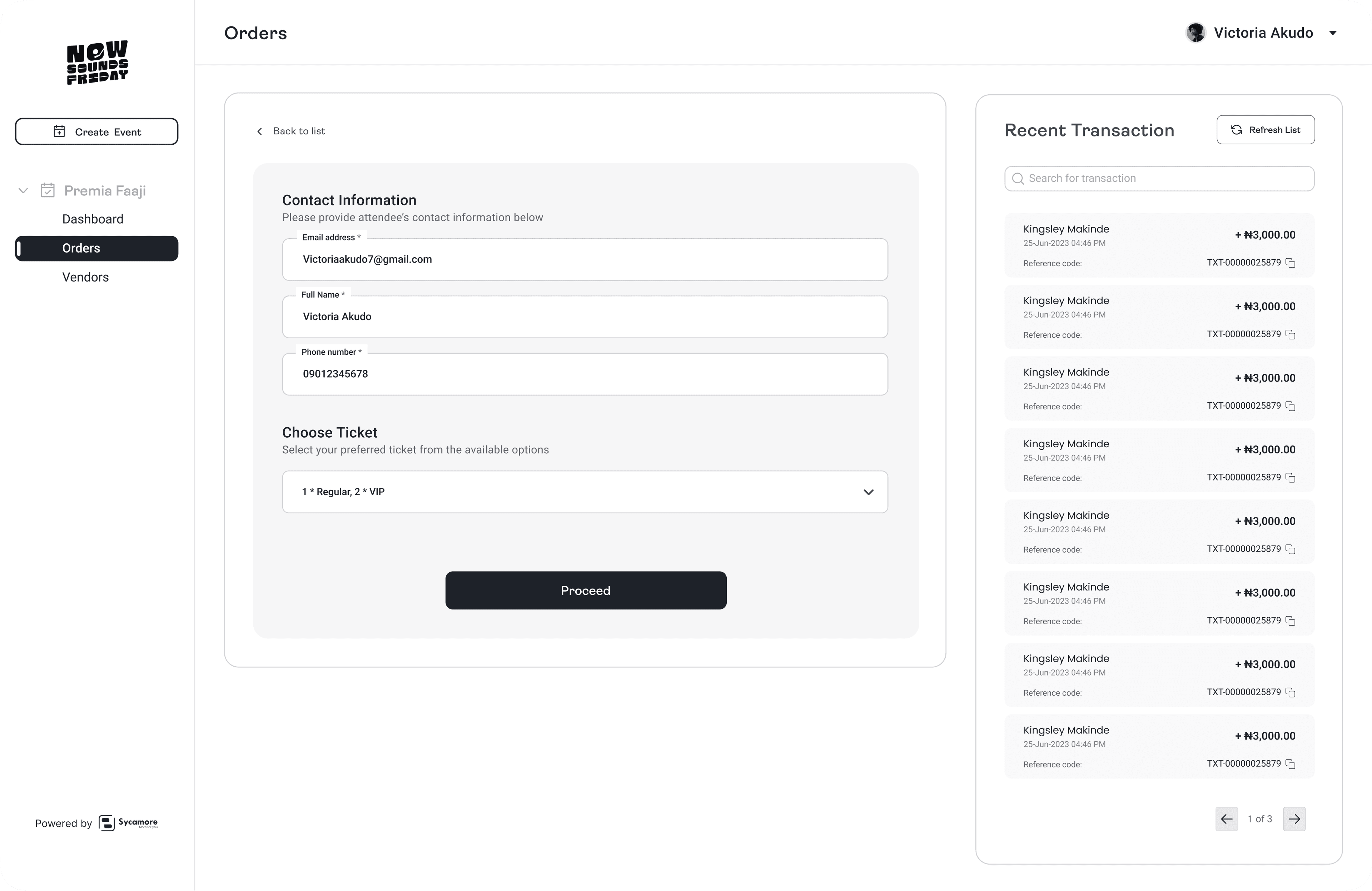
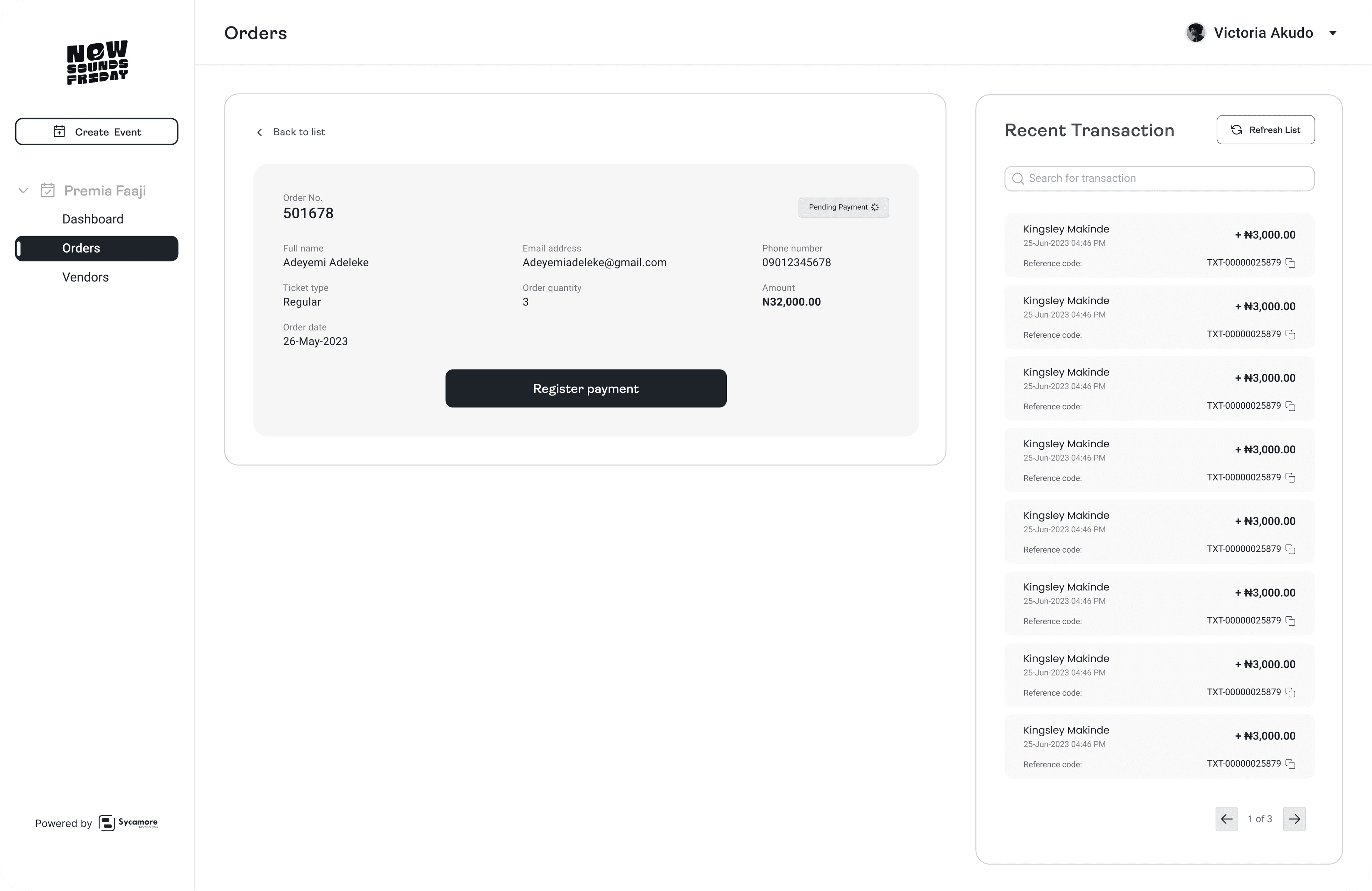
Staff get a permissioned subset of the organizer's interface — check-in, payment verification, walk-up order entry. The principle was simple: staff should be able to do their job and nothing else, with zero risk of touching financial data they shouldn't see.
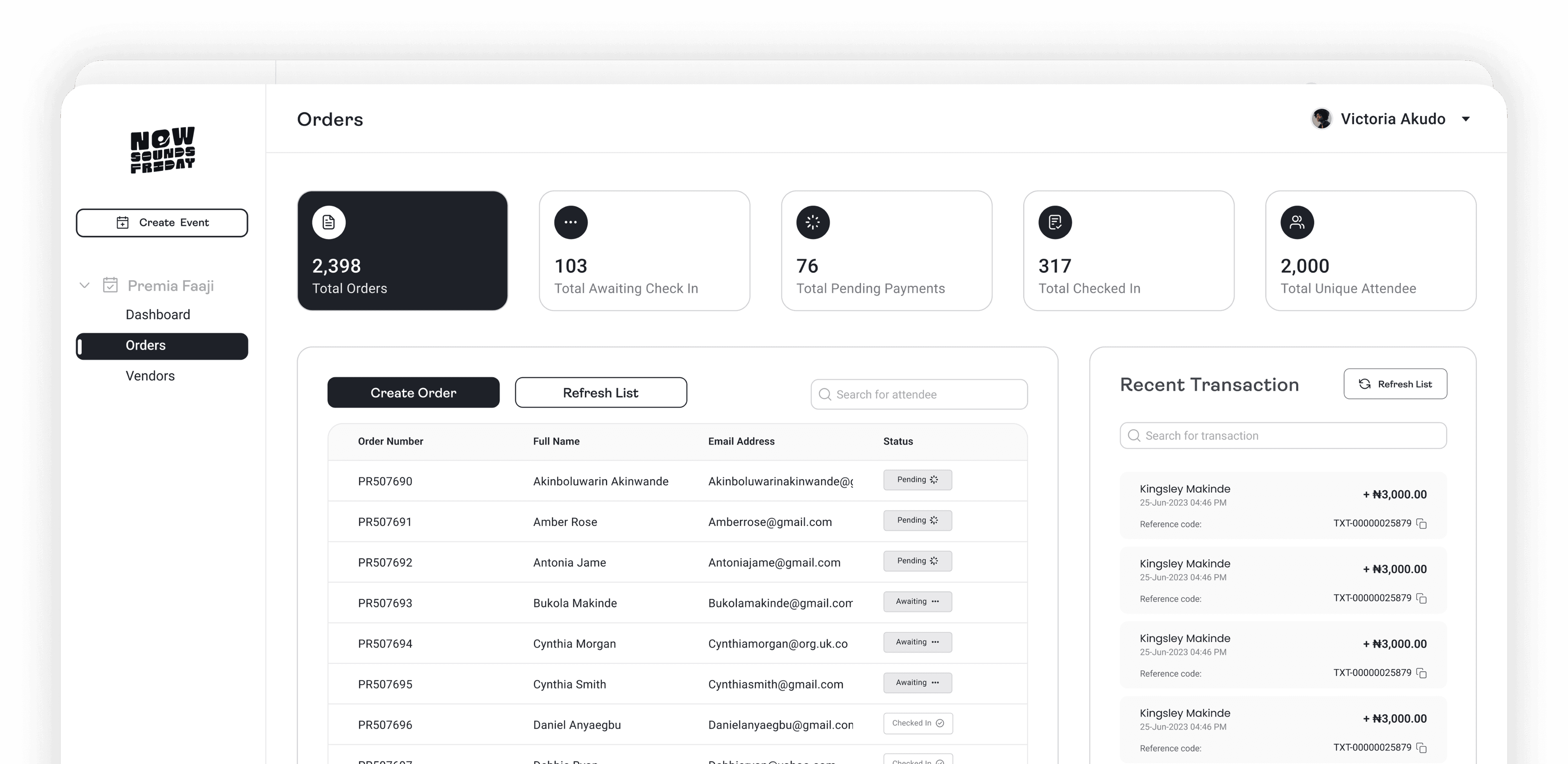
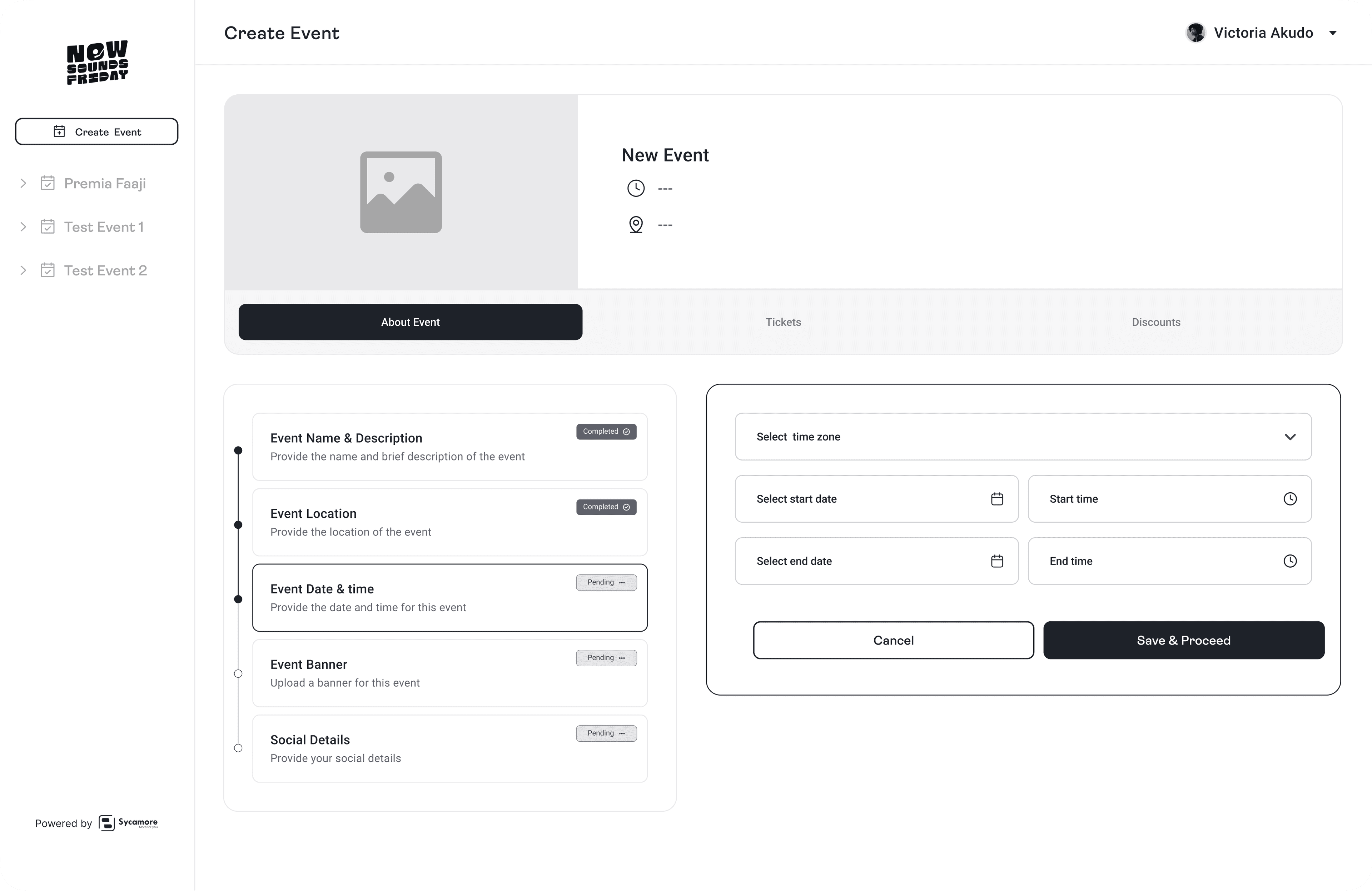
Organizer dashboard: full event command center
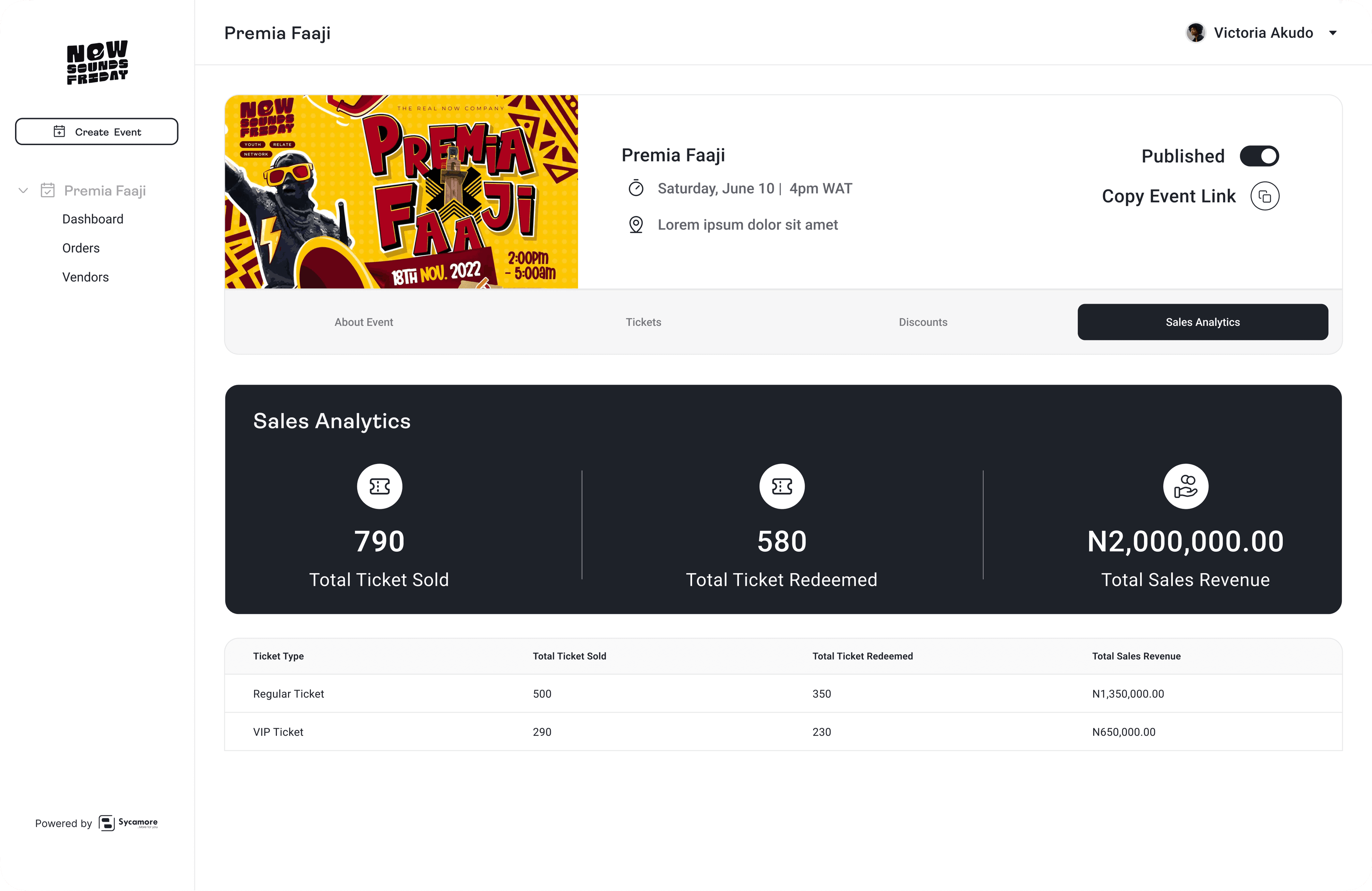
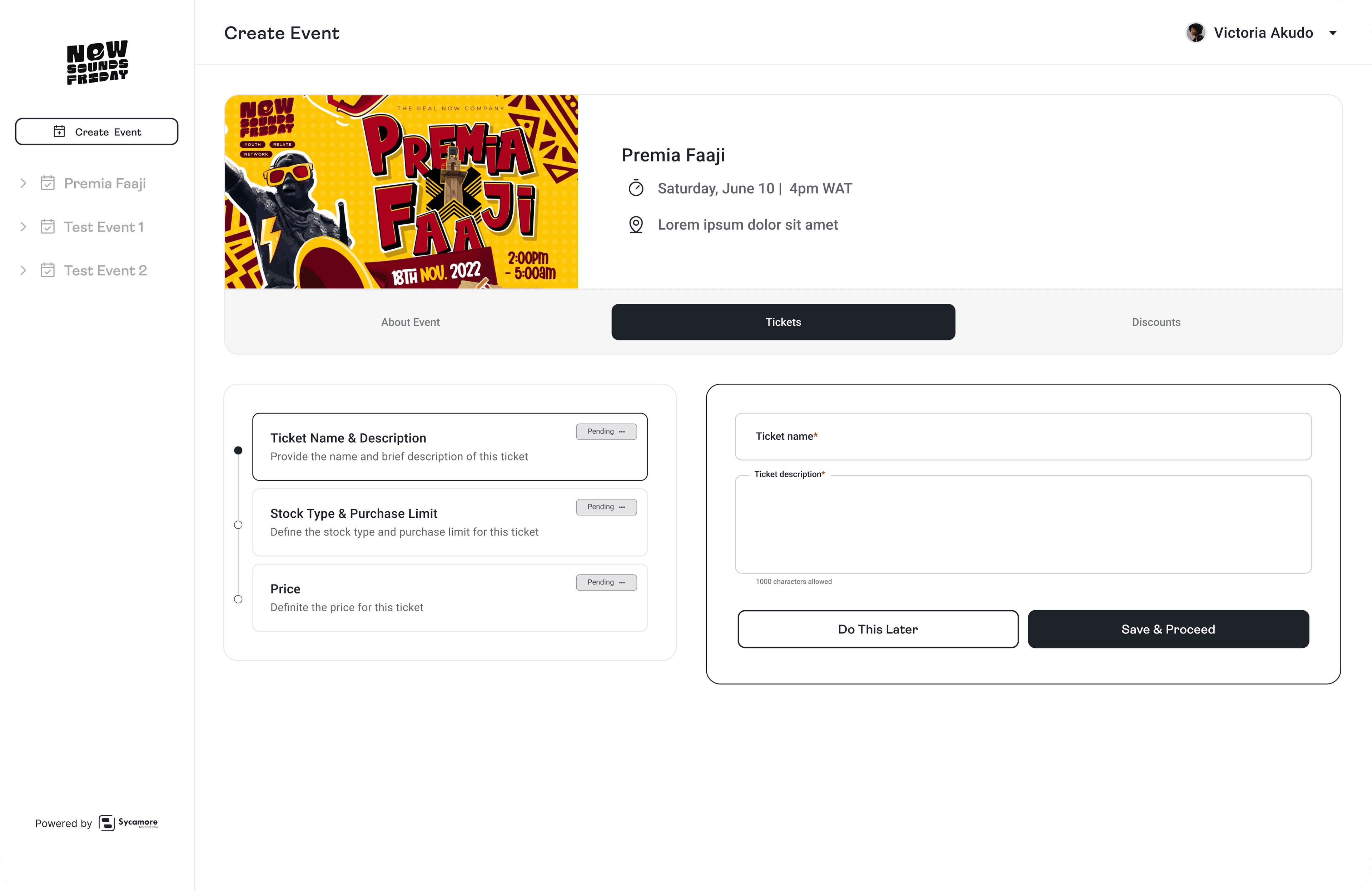
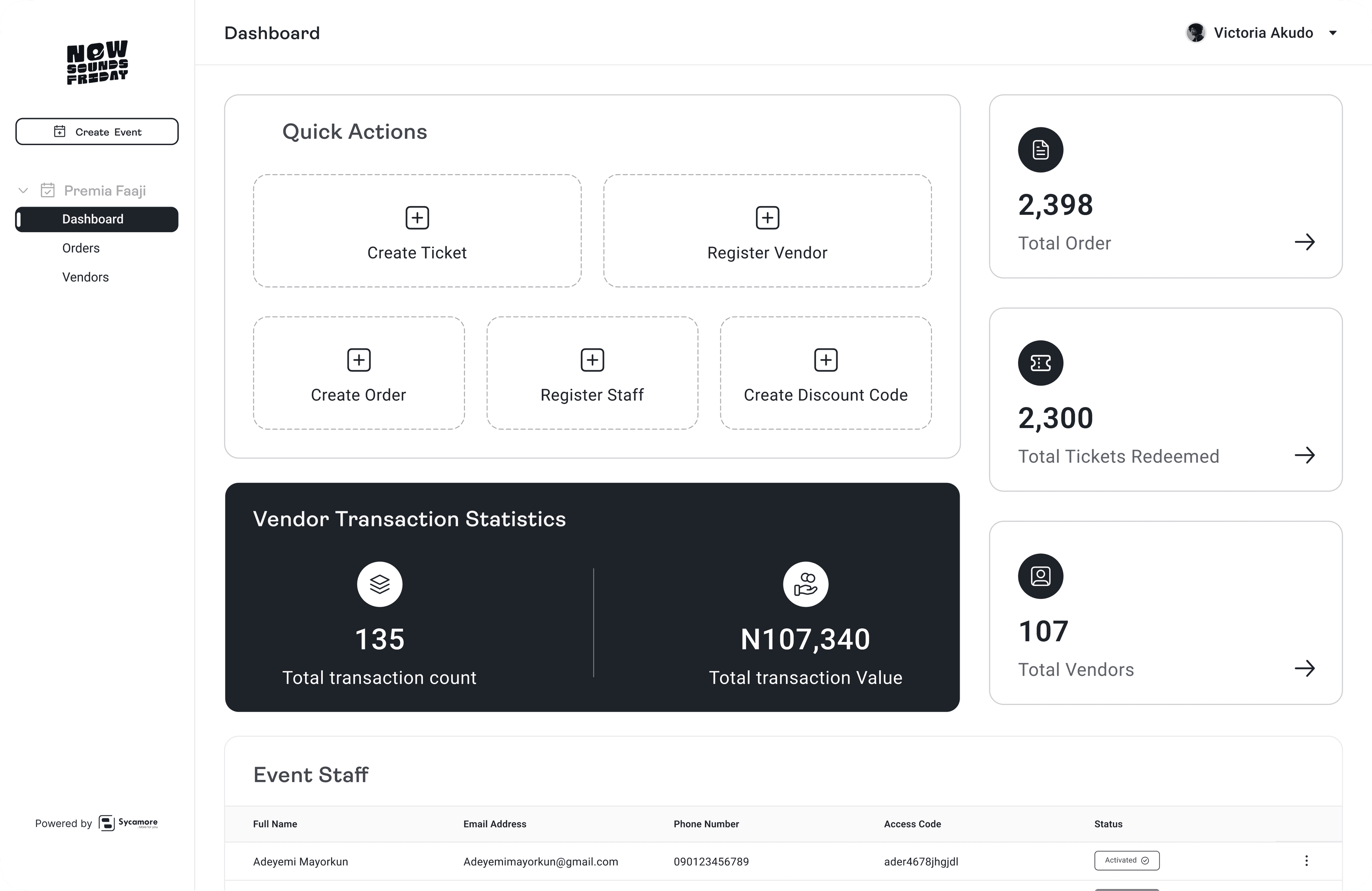
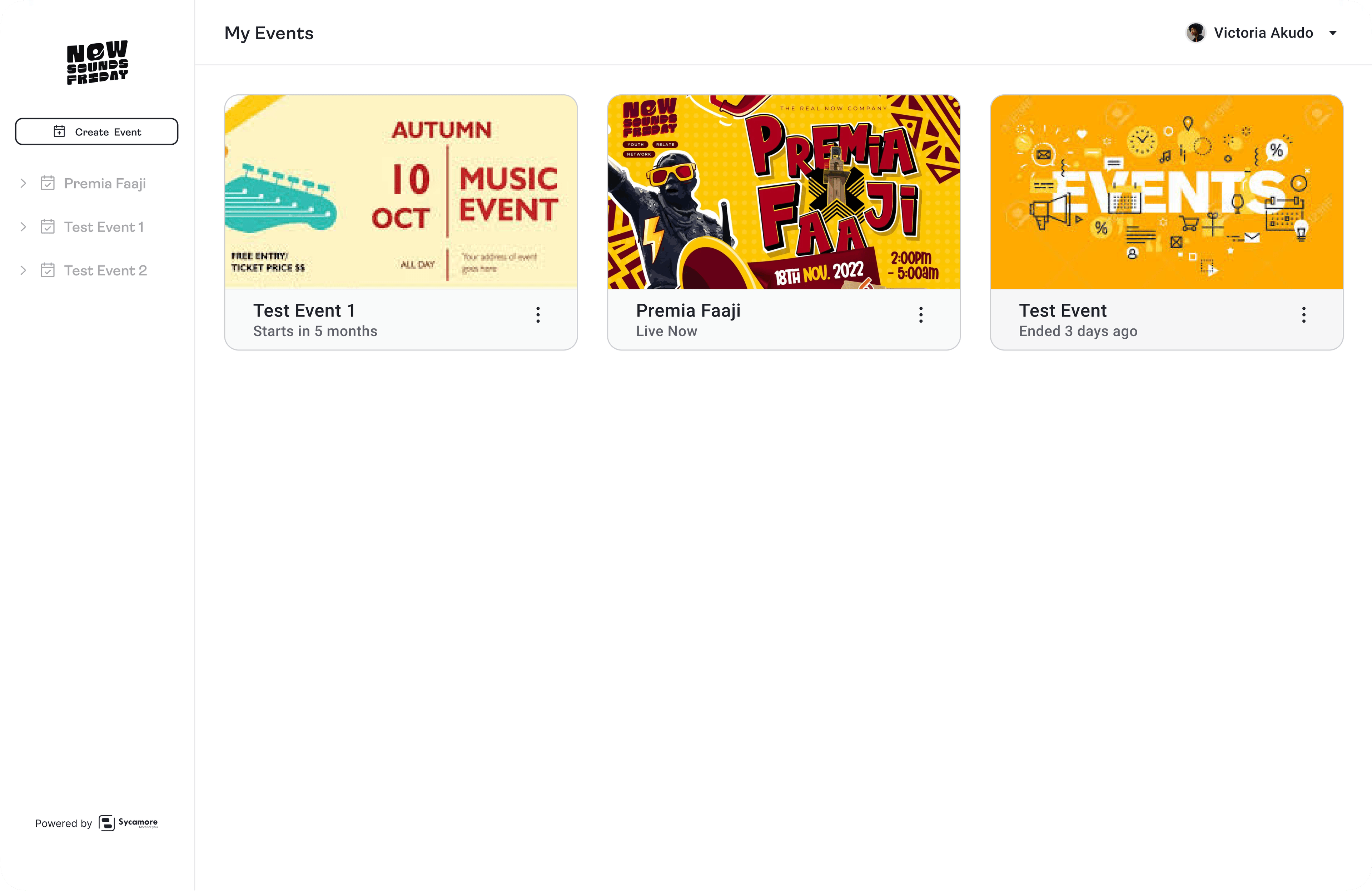
Organizers get end-to-end oversight — ticket sales, vendor performance, attendee data, payout schedules. I deliberately separated operational data (sales, attendance) from sensitive data (attendee financial details, vendor payout accounts), so organizers can run a successful event without being exposed to information that violates user privacy.
Acquisition surface: the landing page
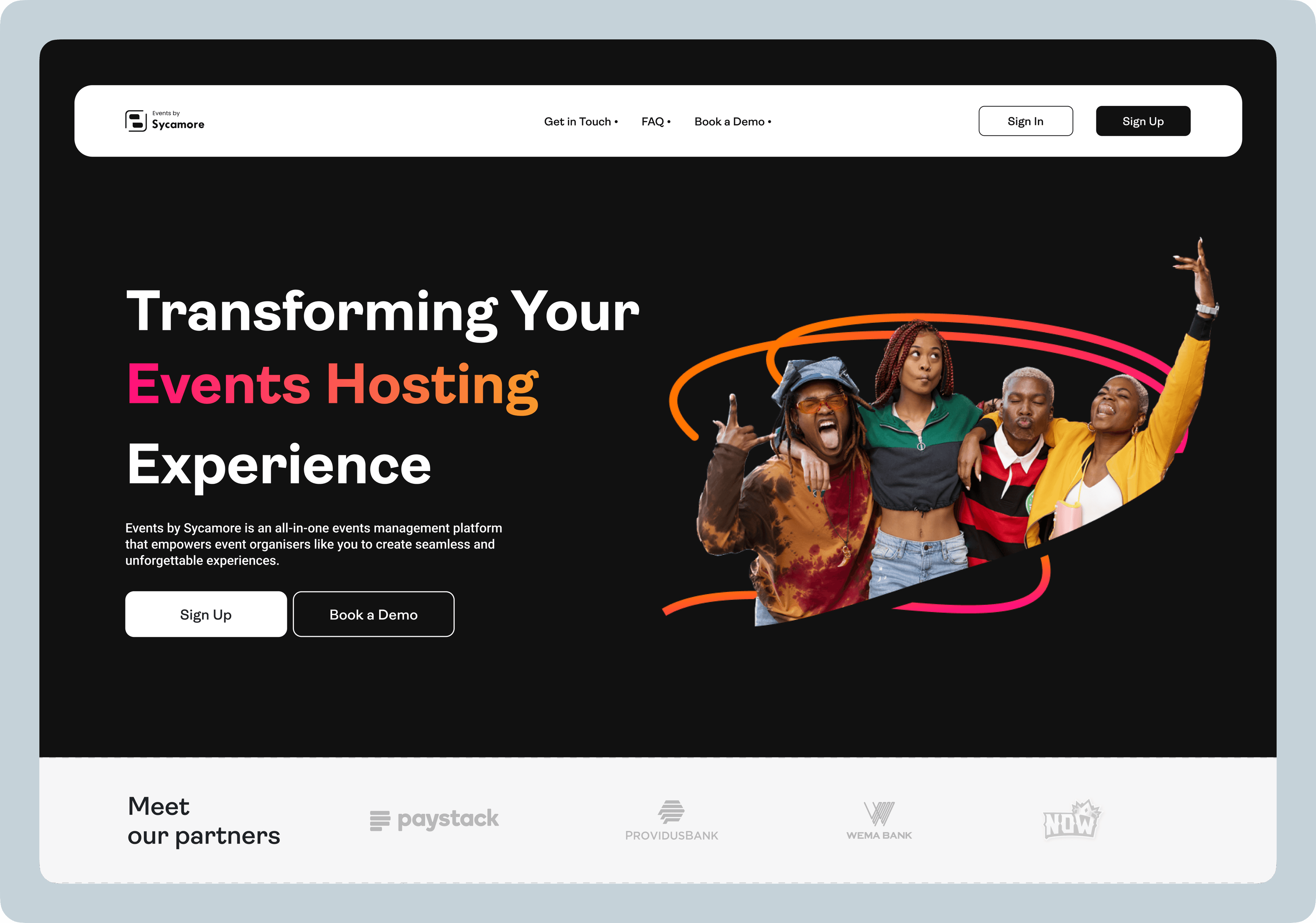
The flip side of the product is how organizers find it. The landing page at events.sycamore.ng was designed as a focused conversion surface for organizers — hero, value props, feature highlights, social proof, FAQs, and sign-up. It speaks specifically to event organizers and frames every other user group as a benefit they unlock for their own audience.
After shipping the product, we tracked metrics over 3 months:
- 10
- Events
- 2,124
- Tickets Sold
- +2,000
- Sycamore Accounts Created
What I'd push hardest on if I did this again: build in time for organizer conversations, even just 3 or 4 30-minute calls. Competitor analysis got us most of the way there, but it told me what other platforms did, not what our organizers struggled with. At a longer timeline, I'd anchor decisions in primary research rather than reasoning from secondary signal.
What I'd keep: leaning hard on the existing Sycamore design system. Building a four-surface platform in six weeks is impossible without that leverage. It also meant the product felt like a Sycamore — which was strategically critical given the platform was as much about user acquisition as it was about ticketing.
The bigger lesson: in a product where the same transaction has to ripple through different interfaces, the design isn't really about the screens. It's about the data model and how each role sees a different facet of the same event. That perspective has shaped how I approach platform design ever since.
Next Project